At first, it may seem like a coincidence. Videos appear one after another, even when we never search for them. This raises an important question: Who decides what we see?
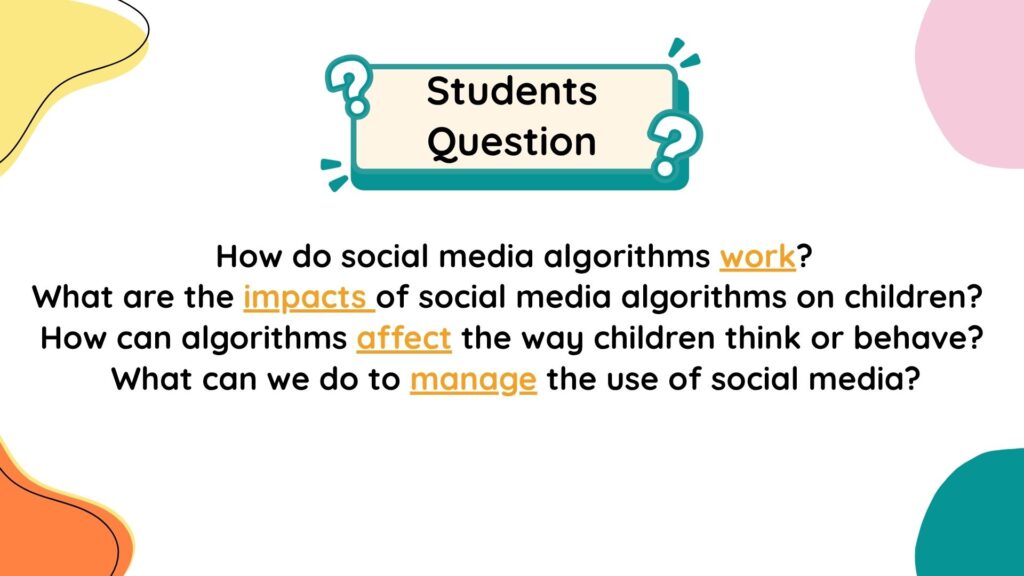
Driven by curiosity, we began to investigate. We wanted to understand whether there is a system behind every scroll—a hidden process shaping our online experience.
Researchers
Mentors
Join us on an exciting journey as we dive into the world of social media algorithms and discover how they secretly shape the way children see and understand the world.
STEP 1: Identifying Global Issue
First, we used the Golden Circle model by Simon Sinek to guide our thinking as we discussed and chose a real-life issue around us to explore.
To organize our investigation, we developed a central idea, lines of inquiry, specified concepts, additional concepts, learning goals, and success criteria.
Learning Continuum
To investigate this issue, we need background knowledge that we have built from Grade 2, Grade 3, and Grade 4.
GRADE 2
HOW WE ORGANIZE OURSELVES
Organization
GRADE 3
HOW WE ORGANIZE OURSELVES
Technology impact on daily life
GRADE 4
HOW WE ORGANIZE OURSELVES
System influence what people consume
Quran Verse
We strengthen our intention to investigate this issue by referring to the Al-Qur’an as our way of life.
This verse teaches us that we should not follow or participate in things we do not fully understand, because we are responsible for our actions. In the end, Allah will hold us accountable for everything we do. In the context of social media, this reminds us to be careful with what we watch, like, and share. We may not always understand how content appears on our screen, but every action we take still matters. Therefore, we should think critically before engaging with content, especially when it may be harmful or inappropriate, because we are responsible for the choices we make online.
STEP 2: DeterminingTime Frame
To achieve our goals in the PYP Exhibition, we worked collaboratively and established clear timelines. Students, teachers, mentors, and parents communicated effectively and provided continuous feedback throughout the process. To monitor progress, we held mentor meetings three times a week and maintained a PYP Exhibition journal.
As our questions deepened, we realized that our initial observations were not enough. We needed reliable knowledge, accurate explanations, and professional perspectives. Therefore, we decided to consult experts from different fields. Our goal was clear: to understand how social media algorithms work, how they influence what we see, and how they may impact children’s understanding of the world. Each expert provided a different lens to help us see the issue more clearly.
Expert 1 - Artificial Intelligent Specialist
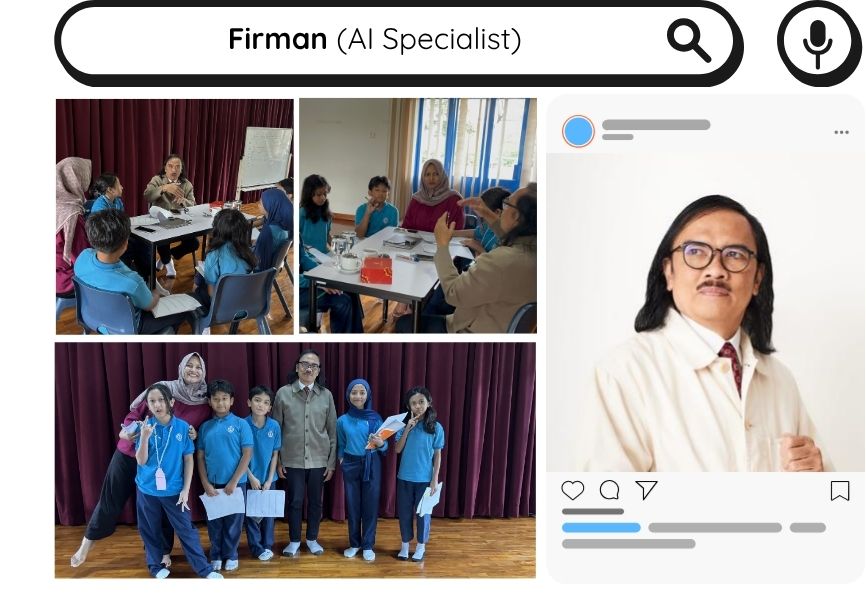
First, we met Bapak Firman Kurniawan, a Communication Lecturer at Universitas Indonesia, to build our foundational understanding. We wanted to answer a basic but important question: What exactly is an algorithm?
He explained that an algorithm is a structured set of instructions that uses data to make decisions. He also clarified that artificial intelligence (AI) is built using algorithms and is designed to analyze large amounts of data, recognize patterns, and make predictions.
In the context of social media, these algorithms analyze user behavior—such as what we watch, like, or skip—to determine what content appears on our “For You Page.”
Through this session, we began to understand that what we see online is not random, but carefully calculated.
Expert 2 - Data Science & Data Analytics
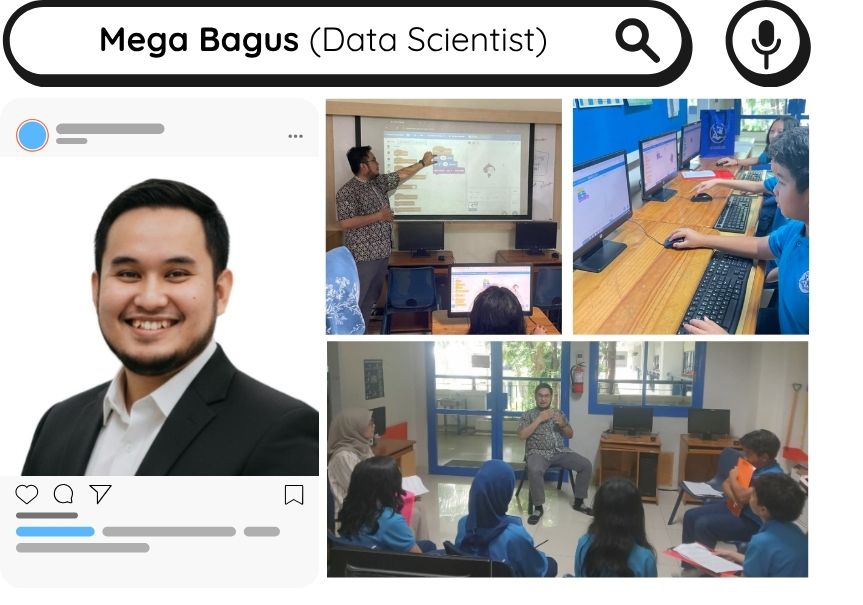
Next, we met Bapak Mega Bagus Herlambang, a Data Science Lecturer and Head of the Industrial Engineering Study Program at Institut Teknologi Indonesia, whose expertise lies in artificial intelligence and data science.
We wanted to understand more deeply how algorithms use data to influence what we see on social media. He explained that social media algorithms analyze large amounts of data to identify patterns in user behavior. These systems are designed to maximize engagement by recommending content that is likely to attract attention, such as videos with many likes, comments, and shares. As a result, content that becomes viral may continue to appear, even if it is not always relevant, appropriate, or beneficial.
Through this session, we understood that algorithms are not only responding to our interests, but also actively shaping our online experience through data-driven decisions.
Expert 3 - Social Media Specialist
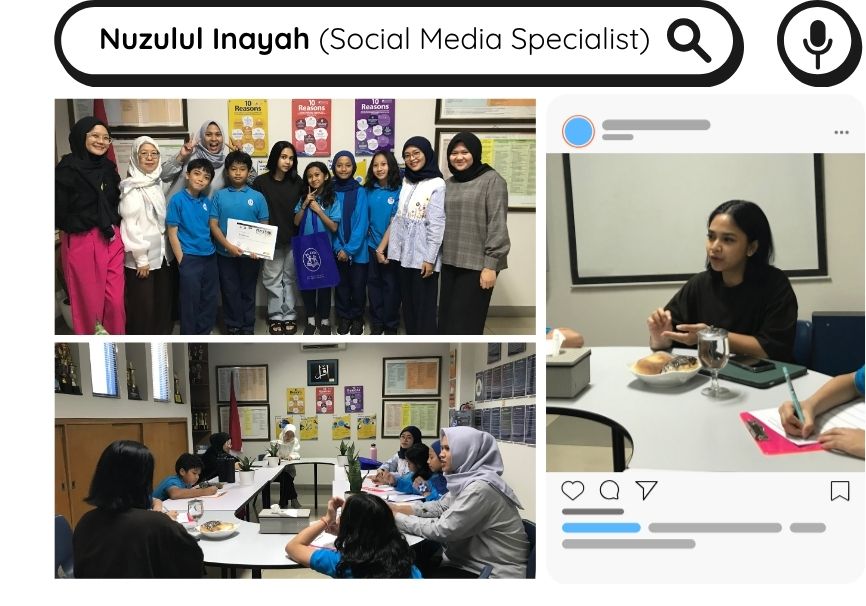
To better understand how quickly algorithms respond to user behavior, we met Kak Nuzulul. Our focus was to investigate how small actions might influence recommendations. She explained that algorithms are highly sensitive to user interactions. Even a few seconds of watching a video can signal interest. The system immediately processes this information and adjusts future recommendations accordingly. This helped us realize that children may unintentionally shape their own content feed without being aware of it.
Expert 4 - Child Psychologist
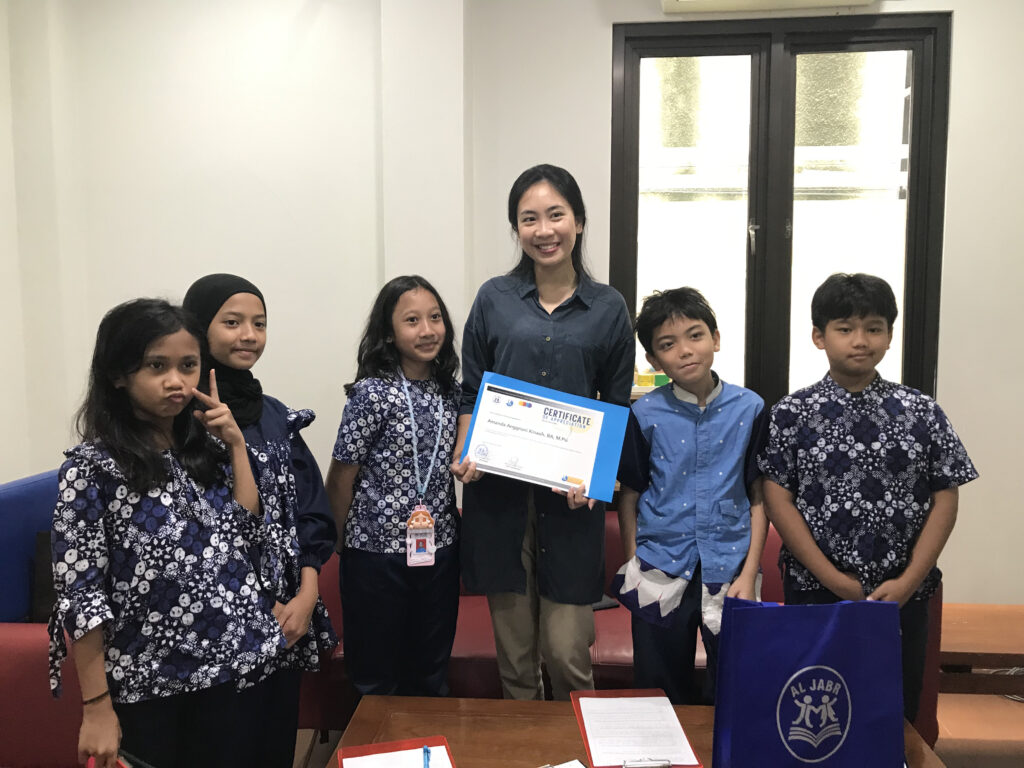
Finally, we met Dr. Amanda, a child and adolescent psychologist at Klinik Pela 9, a clinic specializing in children’s growth, development, and mental health. We chose to consult her because we wanted to understand not only how social media works, but also how it affects children’s emotions and behavior in real life. At Klinik Pela 9, professionals focus on early detection and intervention for children’s developmental and psychological challenges, working as a team of doctors, psychiatrists, psychologists, and therapists to support children holistically.
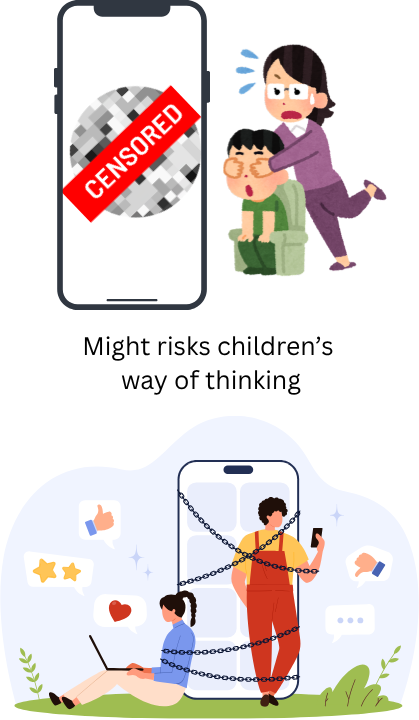
Dr. Amanda explained that excessive exposure to social media can impact children’s mental and emotional well-being. She highlighted that children may experience anxiety, emotional outbursts, reduced motivation, and behavioral difficulties when they are overly exposed to certain types of content. She also emphasized that children’s development is strongly influenced by their environment, including what they see and consume digitally.
To reduce these risks, she recommended several preventive actions:
Active parental supervision
Setting clear time limits for social media use
Encouraging children to engage in positive offline activities
Through this session, we understood that the influence of social media algorithms is not only technical, but also deeply connected to children’s development, behavior, and well-being.
STEP 4: Organizing Learning & Experiment
Experiement
Finding and Analysis
To understand how social media algorithms work, we observed the results of our experiment over five days. We recorded what appeared on each account’s homepage and looked for patterns in the recommendations. Throughout the five days, we noticed several patterns:
The homepage changed quickly, sometimes after watching only a few videos.
More related videos appeared when we searched keywords and liked similar content.
However, unrelated and viral videos still appeared on all accounts.
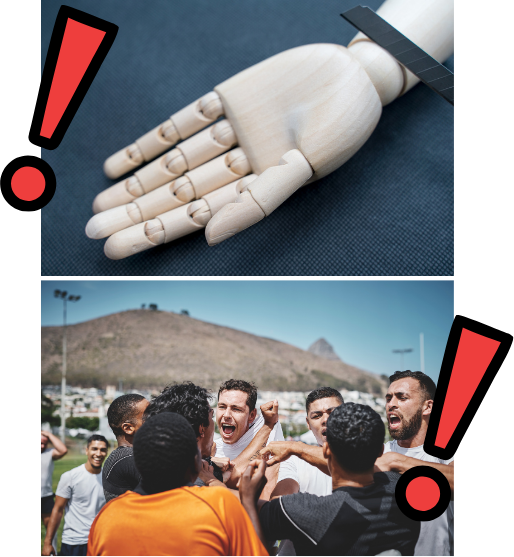
Some videos were not suitable for children or did not match the topic.
Advertisements also appeared, even when they were not related to the topic.
When we did not use keywords, the recommendations became more mixed and less consistent.
These findings show that the algorithm responds to what we do, but it also adds other types of content beyond our chosen topic. The bar graph below shows how the recommendations changed each day.
From the graph, we observed that Account A and Account C had the biggest difference between related and unrelated videos. This means that even when we focused on one topic, the algorithm still showed different types of content to test our interests.
Overall, we found that the algorithm changes based on user activity. It quickly learns from what we watch, search, and like, and then shows more similar videos.
However, the results were not always the same for each account. Sometimes, the algorithm showed random or viral videos. We think this happens because the algorithm is trying to test what else we might like and keep us interested.
This shows that the algorithm learns quickly, but it does not focus on only one type of content. Instead, it mixes different kinds of videos, which can influence what we watch and explore. From this, we understand that what we see on social media is not fully controlled by us. The algorithm plays a big role in shaping our experience and what we learn from it.
Interpret and Evaluate Data in a Big Picture
After collecting and analyzing all our data, we began to look at the bigger picture. From all the data we collected, we can conclude that:
Overall, this shows that social media is not only for entertainment. It is a powerful system that can shape what we see, think, and understand about the world.
STEP 5: SharingThe Exhibition
After understanding how social media algorithms influence our behavior, we decided to take action starting from ourselves.
We manage our screen time, use parental controls, turn off content recommendations, and seek supervision from our parents when engaging in online activities.
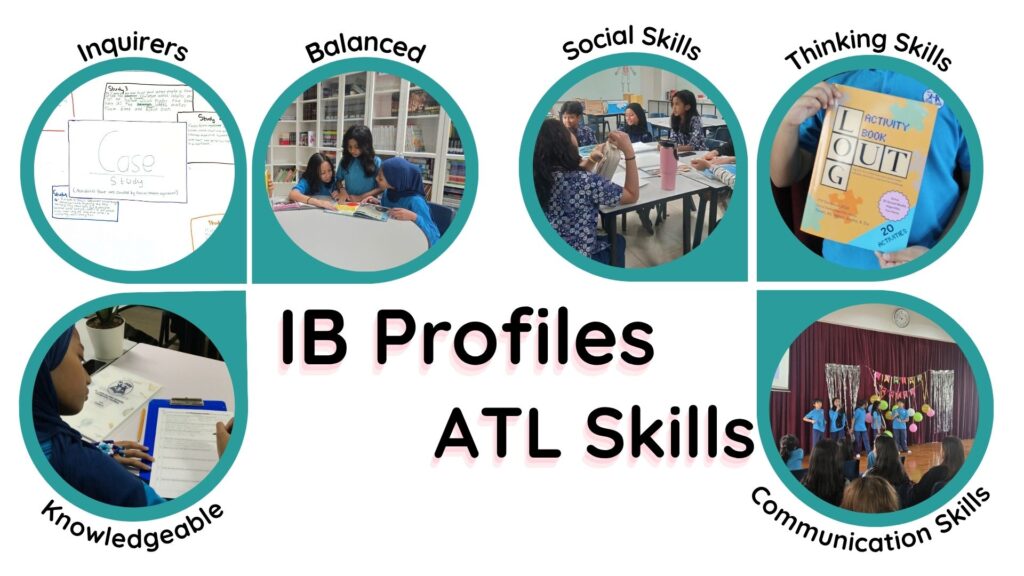
We created an activity book with 20 focused activities to encourage children and teenagers to spend less time scrolling on social media and more time engaging in meaningful tasks.
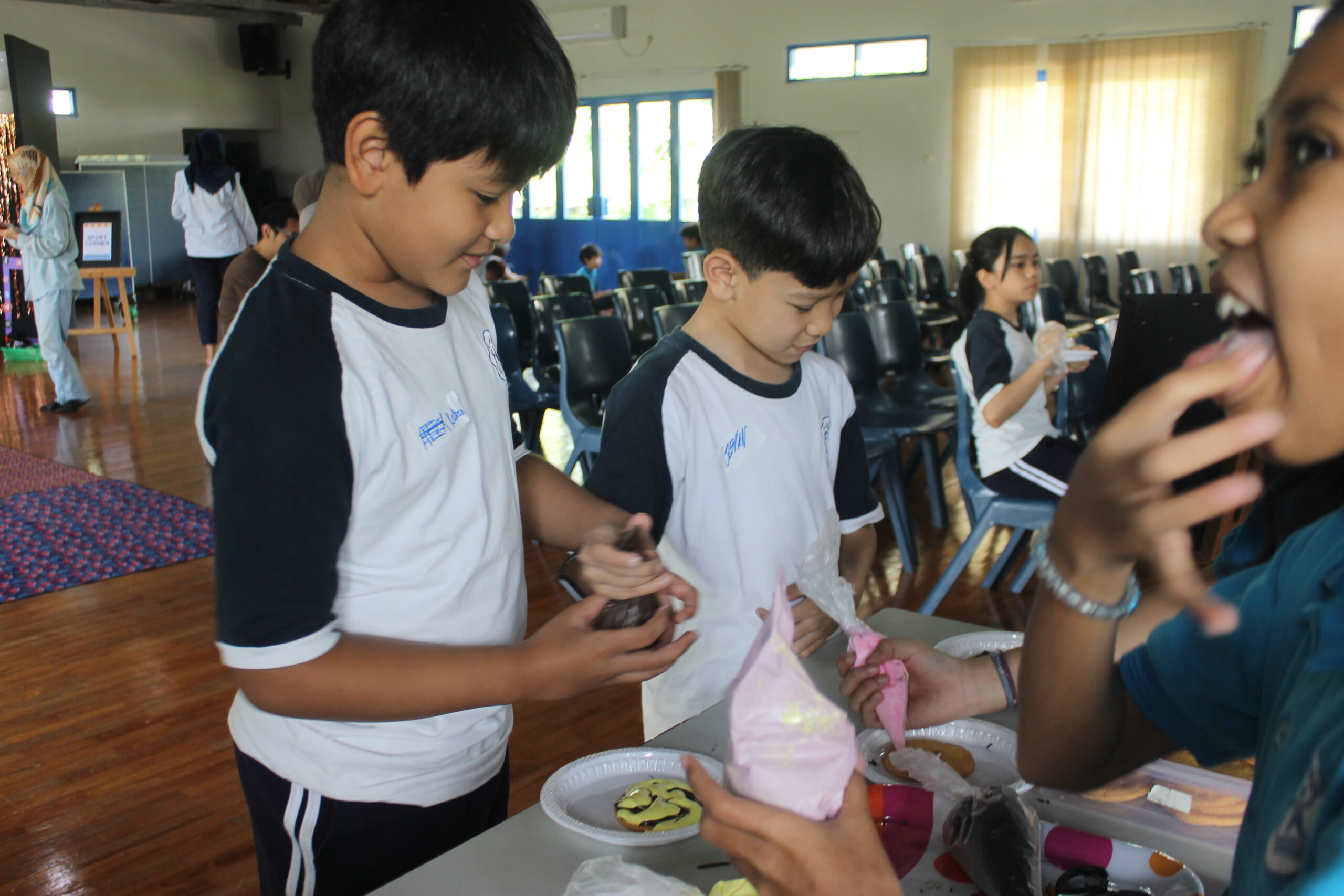
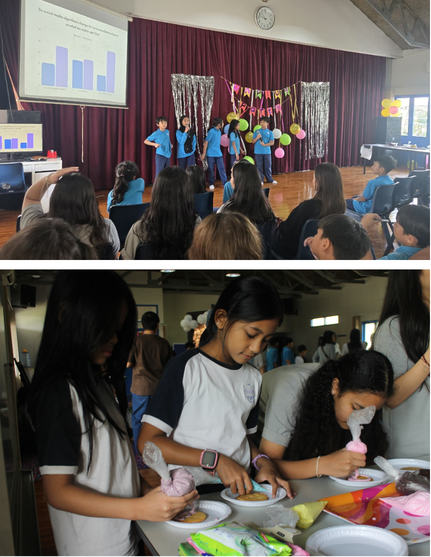
The Unplug Party is an event where we share what we have learned about social media algorithms while encouraging others to enjoy positive offline activities instead of using social media.
Panel Session
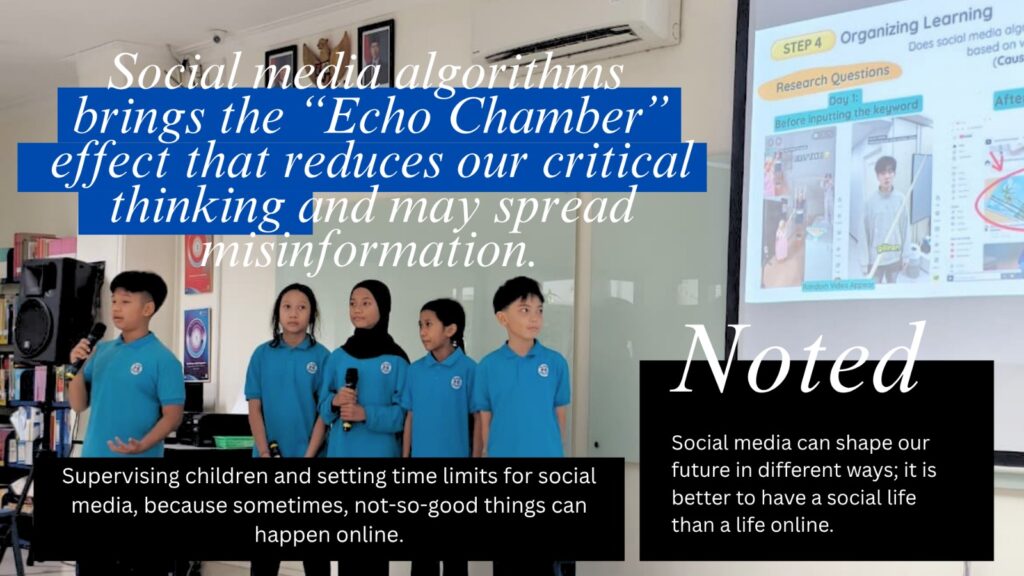
We proudly presented our exhibition journey to the Head of School, Ibu Uchu Riza, along with our panelists: Ibu Atya (Board of School), Mr. Arie (Principal), and Mr. Ryan (PYP Coordinator). Parents and mentors were also present, listening attentively and supporting us throughout the session.
During the presentation, we shared our ideas and reflections on the impact of excessive online engagement. We were pleased to receive positive feedback and support for the key takeaways from our journey, which highlight the importance of reconnecting with others and building meaningful social interactions instead of developing an addictive online lifestyle.
Social media can shape our future in different ways. It is better to have a social life than a life online.
Staging Session
Previous
Next
STEP 6: Reflection
We used to think
Now We think
Our Success
Understanding the impact of social media algorithms, reducing our screen time, forming healthier habits, and sharing our knowledge to encourage others to do positive activities through The Unplug Party.
Our Challenge
One of our challenges is that many teenagers are already highly dependent on social media and have been exposed to harmful or violent content.