Human needs an oil can be fulfilled through sustainable productions
Key Concept
1. Change
2. Causation
3. Responsibility
Related Concept
1. Energy
2. Air Pollution
3. Sustainability
Lines of Inquiry
1. The process of fossil fuels converts to gasoline
2. The environment impact of petroleum production
3. Responsibility of using fossil fuels
STEP I: IDENTIFYING THE GLOBAL ISSUE
Did you Know????
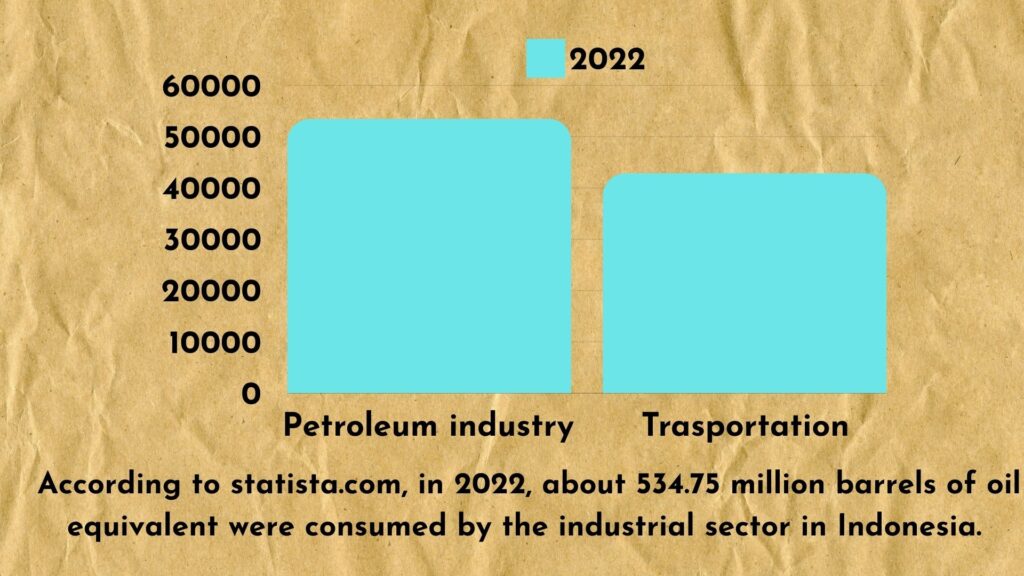
In 2021 the industry sector is the second-most energy consumption in 2 Indonesia. Surprisingly, it increased to number one in 2022.
Indonesia's industrial sector consumes more than 500 million barrels of oil, and fuel consumption is increasing year by year. This is why we are raising this issue as our PYP Exhibition project.
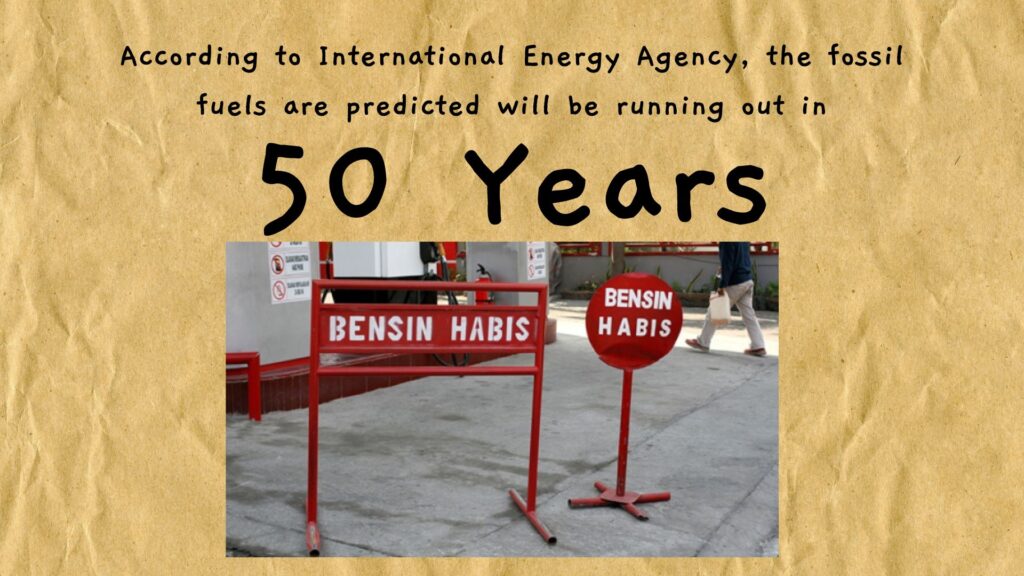
According to International Energy Agency, the fossil fuels are predicted will be running out within 50 years. By doing this exhibition project, We hope we could find the solution for this global issue.
Sustainable Development Goals
After identifying the global issue, we chose SDG number seven, nine and fifteen since our exhibition projects encourages people to use sustainable energy.
Doughnut Economics
The doughnut economics
Social Foundation: Energy
Ecological ceiling: Climate change
Our central idea refers to what we have learned in K2, which is environments, Energy and forces in grade 1 and renewable and non renewable energy in grade 4
Prior knowledge is important because it is foundation for new knowledge.
To make our exhibition project succeed, we applied all 5 ATL Skills
Thinking skill: We use our thinking skills when conducting the experiment
Social skill: We interviewed Al Jabr communities about the transportation and fuels they use
Self-management skill: We are principled by doing the mentoring according to the schedule
Communication skill: We practiced our communication skills by doing presentations in front of other students and Al Jabr communities
Research skill: We applied our research skills by finding out data from many resources
IB PROFILES
We are thinkers by learning how to make bioethanol from cassava.
We are risk takers by challenging ourselves to present in front of Bhakti Mulya's students
We are inquirers by interviewing resources spakers from Lemigas and Pertamina
STEP III:
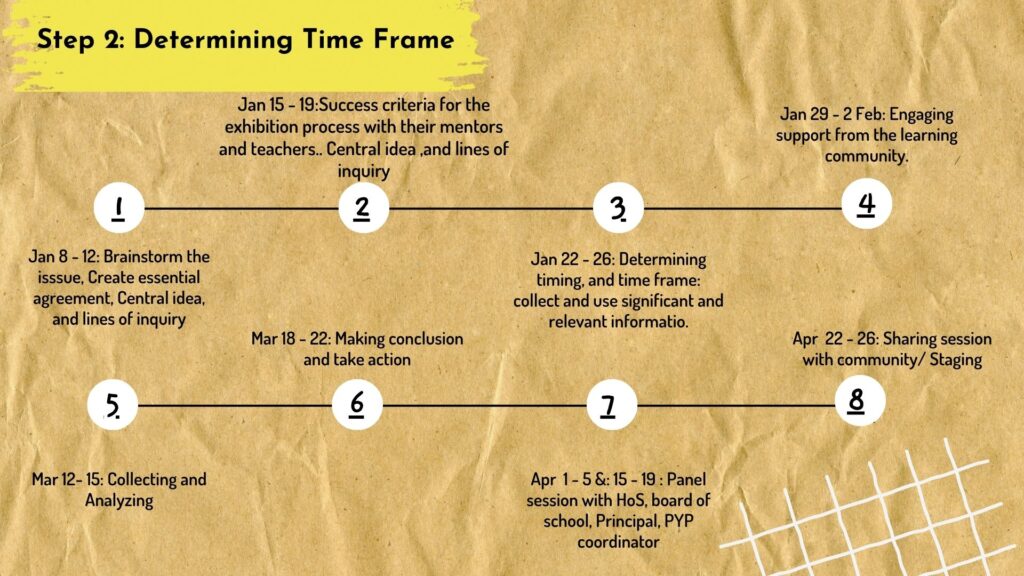
Determining Time Frame
This is our timeline. We start on Jan 8 by identifying the global issue and deciding on our central idea. Hopefully, we will finish the exhibition by doing PYP exhibiton staging on April 30th
We developed a list of success criteria for the solution, which impacts our learning outcomes.
First, by conducting research and experiments, we can identify how to obtain fossil fuels and the process of converting fossil fuels into gasoline.
Second, we will understand the impact of the Petroleum industry on human health and the environment by conducting a survey of the Al Jabr school community.
Third, by promoting biofuel choices and actions in our everyday lives as a sustainability solution.
Gathering Data from resources speakers
1. PT PERTAMINA HULU ROKAN
Previous
Next
To gather data about fossil fuels and the petroleum industry, we visited several companies related to our topic. First, we visited PERTAMINA and interviewed Mr. Kirandra, an exploration geologist at Pertamina Hulu Rokan. There, we learned what fossil fuel is, how to get crude oil from the earth, and about different petroleum products made from crude oil.
2. LEMBAGA MINYAK DAN GAS BUMI (LEMIGAS)
Previous
Next
Our second visit was to the government office: Lemigas. Lembaga Minyak dan Gas bumi. We interviewed Ibu Riesta Anggarani and Bapak Dimitri as Penanggung Jawab Unit K2LK. LEMIGAS is a research center for oil and gas technology development under the Ministry of ESDM. There, we learned about Lemigas's function, the Petroleum Industry in Indonesia, and the types of Gasoline. They also told us that Pertamina produced Pertamax Green as a new product to support the Net Zero Emission (NZE) 2060.
3. ZOOM INTERVIEW
We also had an online interview with Mr Engga Saputra, a laboratory analyst in Pertamina. We learned about the octane number, the eight pillars of the energy transition, the process of converting crude oil into oil products in the refinery unit, why we have to choose the right gasoline for our vehicle, and the pollution caused by the petroleum industry.
STEP IV:
Organizing The Learning
STEP IV:
Organizing The Learning
Experimenting and Playing with Possibilities Solving Problems in a Variety of Way
Previous
Next
Besides visiting other companies, we conducted a social experiment by interviewing Al Jabr communities about the gasoline they use.
The result of our survey is, mostly Al Jabr teachers and staff use Pertamina more than Vivo and Shell. We found out that they mostly use Pertalite; the second one is Pertamax, and the rest use Shell and Vivo as their petrol
When we visited Pertamina, Mr. Arie told us that plants could be used as alternative fuels, such as bioethanol from cassava and sugarcane.
We conducted an experiment by making bioethanol from plants to continue our inquiry process
There are three steps in the experiment; the first step is liquefaction; we need to have plants that contain glucose; we chose butter cassava because it has high glucose content; we grated around 1kg of cassava and boiled it with water until it turned into porridge.
In the second step in fermentation, we fermented the butter cassava by mixing it with yeast and dividing it into two plastic containers, which we fermented for 3 and 6 days
Step 3 is distillation. We distillate the fermented cassava by using a heating mental to separate the bioethanol and the other liquid and by keeping the temperature at 78 Degrees Celsius because its the heating Temperature for bioethanol.
The result of our experiment was 22ml of bioethanol for the first experiment, in which we fermented the butter cassava for three days, and 91ml of bioethanol for the second experiment, in which we fermented it for six days.
We also practiced checking the pH level by using a pH meter to check if it’s fully bioethanol.
The result of our experiment was 22ml of bioethanol for the first experiment, in which we fermented the butter cassava for three days, and 91ml of bioethanol for the second experiment, in which we fermented it for six days.
We also practiced checking the pH level by using a pH meter to check if it’s fully bioethanol.
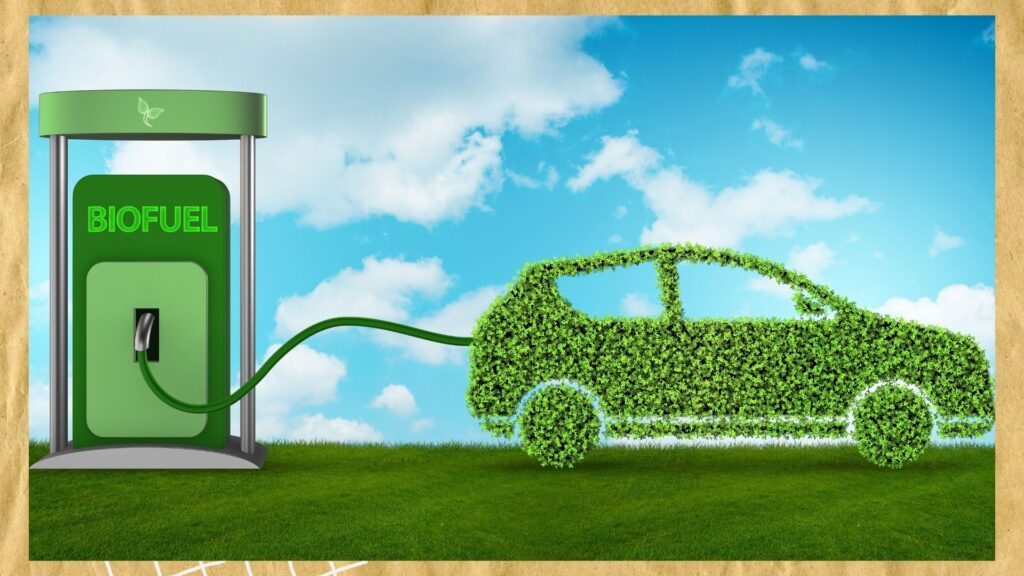
As grade 5 students, we must save the earth from the energy crisis. One of our actions is to campaign about biofuel, which is fossil fuel mixed with bioethanol.
As an alternative to fossil fuels, bioethanol has a high octane number. It is the best biofuel and is mainly used as an additive to gasoline, producing less emissions and much better for the environment.
Have you ever heard about octane numbers? Every type of gasoline has a different octane number. For Example, Pertamina has gasoline with 88 to 95 octane numbers. To update things, Indonesia no longer produces gasoline with 88 octane; the minimum octane number is 90. This is because 88-octane gasoline produces more CO2 emissions.
We must choose suitable oil for our vehicles since it impacts the machines and the environment. Choose the higher octane number; it’s better for the machines and produces fewer emissions.
The good news is that we can now get biofuel gasoline in Jakarta, Surabaya, and, most recently, Semarang. It is called Pertamax Green 95, which contains 5% bioethanol from sugarcane. As we can see, the price of Pertamax Green is only 1000 rupiah higher than Pertamax 92, but it has a good impact on your machines and produces less emissions. We can find Pertamax Green in these gas stations.
STEP V:
Monitoring The Exhibition
STEP V: Monitoring The Exhibition
Throughout the exhibition process through Questioning, exploring, and collecting data support by mentors by monitoring individuals and groups in regular meetings and documenting learning evidence in our PYP exhibition journal.
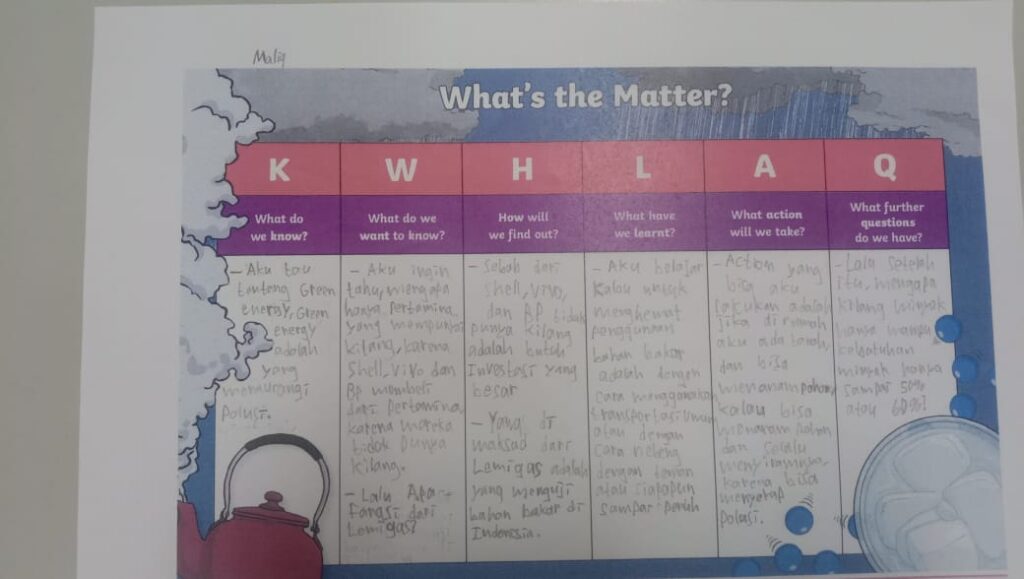
Before, we didn’t know the safest gasoline, the types of petrol, its characteristics, and why people use it daily to produce fewer emissions. By exploring and researching new information, both primary and secondary resources, we can improve our knowledge.
Now, we know about biofuel and how to save fossil energy through experiments. As part of our exhibition project, in sustainability action, we will save fossil energy by using biofuels and public transportation wisely.
Our exhibition is succeeded because:
We made bioethanol from cassava and learned about gasoline that is suitable for our vehicles. We later on donate the bio ethanol for Al Jabr laboratory to be used as spirtus. We know that Pertamina produces a Biofuel called Pertamax Green.
In fact, the needs of fossil fuels in Indonesia is very high while the crude oil production is decreasing year by year. Thats why we encourage others to use biofuel as alternative energy.
STEP VI: SHARING THE EXHIBITION
STEP VI:
Sharing The Exhibition
We made an educational video about the petroleum industry and how to save fossil fuels to educate people about using public transportation and biofuels. Let’s watch the video.
To promote sustainable energy, we also made a song called "Yuk hemat BBM." We also played musical instruments and recorded our music in the recording studio; then we uploaded the song to You Tube
Slide 3 Heading
Lorem ipsum dolor sit amet consectetur adipiscing elit dolor
Click Here
Previous
Next
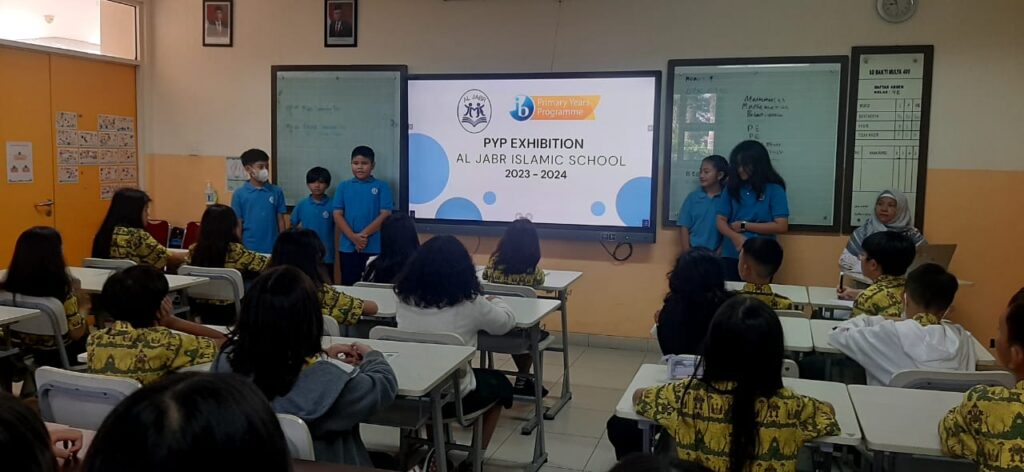
After conducting the experiments and gathering data from the experts, we know more about fossil fuels and the petroleum industry in Indonesia. Then, we take action by sharing our knowledge with students in Bhakti Mulya. There, we present and play games and also watch educational videos that we made.
We also share our knowledge with MYP students and Al Jabr communities.