
Land conversion affect the life of javan rhinos
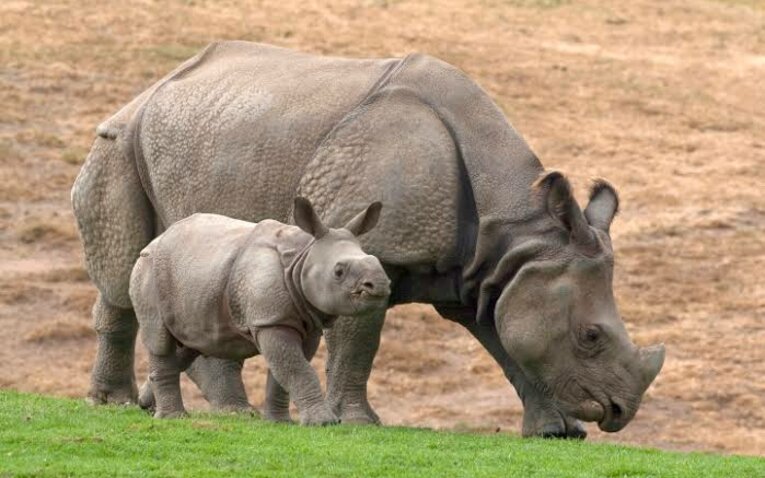
Biodiversity loss is one of the most important global environmental and human problems today (Díaz et al. 2006; Cardinale et al. 2012; Dirzo et al. 2014). Species face increasing and potentially synergistic threats from land conversion leading to habitat loss and fragmentation (Rybicki & Hanski 2013), nonnative species invasions (Vilà et al. 2011), overexploitation via local to global socioeconomic forces (Brashares et al. 2011; Wittemyer et al. 2014), and alterations of global physical processes, such as climate change (Moritz & Agudo 2013). Altering the seemingly inevitable path of many species extinctions will be difficult. The Javan rhinoceros (Rhinoceros sondaicus) is one of the endemic animals in Java, Indonesia, which is currently threatened with extinction and is included in the 25 species program as the top priority for the Indonesian government. In 2021 the Indonesian Ministry of Environment and Forestry said that only 75 Javan rhinos remained in Ujung Kulon National Park in Banten Province. Ujung Kulon National Park is the primary habitat of the Javan rhino, so it requires special attention to protect this habitat. One of the reasons for the reduced population of the Javan rhinoceros is the diminishing availability of habitat. Habitat reduction occurs due to changes in land cover due to human activities.


Meet the Researchers
Hi, welcome to our page!
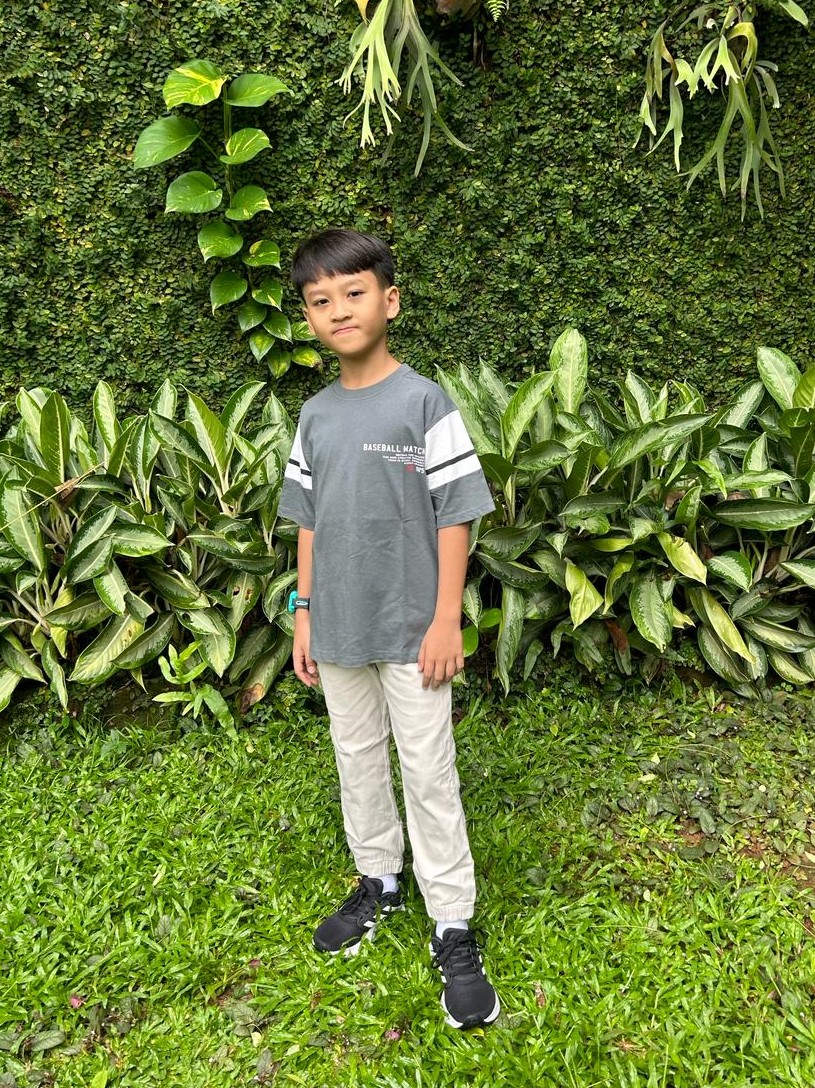
We are Grade 5 students, and we welcome to you get to know our research about the impact of land conversion to the life of Javan Rhinos.
We are very curious about this topic because we are the guardian of this planet. We should take care of the life of this planet and everything inside it, such as human, plants, animal and so on.
This reseach hopefully will be benefit for us to deepen our knowledge about biodiversity and for every one to ensure that we can still see/have Javan Rhinos as our endemic animals.
Enjoy exploring and become a life-long learner!

Amara

Neira

Arya

Ranuka



Meet the Mentors
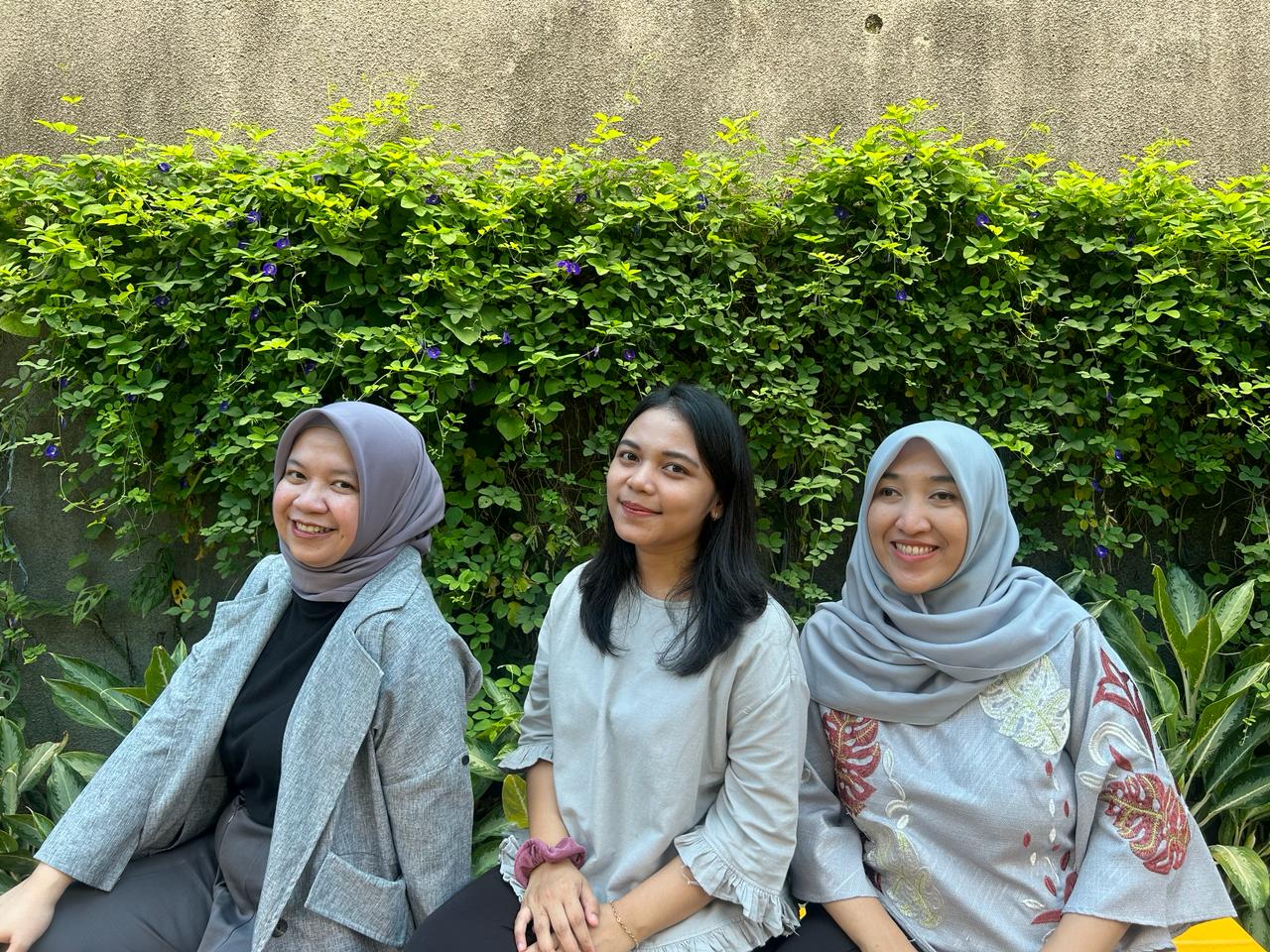
We are honored and grateful to be the mentors of Javan Rhinos group.
All students are inquirer to find all information they need for their research. We also collaborate to find the experts of this topic and alhamdulillah we got a lot of valuable information.
We are proud that in the end we can create products and take action to ensure the life of Javan Rhinos still existed. Hopefully, this research will be their inspiration to grow and be more reflective and knowledgeable.
(Ms. Nana, Ms. Sari, Ms. Shinta)
Sharing the Planet
Human Systems and Economic Activities: The study of how and why people construct organizations and systems; the ways in which people connect locally and globally; the distribution of power and authority.
Central Idea
The land conversion impact the life of Javan Rhino.
Key Concepts
Connection, Causation, Responsibility
Related Concepts
Ecosystem, Land Conversion, Endangered Animals
Lines of Inquiry
1. The roles of Javan Rhino in the ecosystem (Connection) 2. The Impact of Land Conversion on Javan Rhino Habitat (Causation) 3. Ways to protect the Javan Rhino (Responsibility)
Learning Outcomes
1. Explain the roles of Javan Rhino in the ecosystem (Connection) 2. Examine the Impact of Land Conversion on Javan Rhino Habitat (Causation) 3. Describe ways to protect the Javan Rhino (Responsibility)
The Doughnut of Planetary and Social Boundaries

Social Foundation
Peace and justice
Ecological Ceiling
Biodiversity loss
Land conversion
WHY we choose this problem?
Because Javan rhinos:
Need longer time to reproduce
Solitaire animals,
Need specific habitat,
Illegal hunting.
Sustainable Development Goals

Ensure Ensure sustainable consumption and production patterns

Protect, restore and promote sustainable use of terrestrial ecosystems, sustainably manage forests, combat desertification, and halt and reverse land degradation and halt biodiversity loss.
Al Qur'an Verse
QS. Al Baqarah (2): 164
“Sesungguhnya dalam penciptaan langit dan bumi, silih bergantinya malam dan siang, bahtera yang berlayar di laut membawa apa yang berguna bagi manusia, dan apa yang Allah turunkan dari langit berupa air, lalu dengan air itu Dia hidupkan bumi sesudah mati (kering)-nya dan Dia sebarkan di bumi itu segala jenis hewan, dan pengisaran angin dan awan yang dikendalikan antara langit dan bumi; sungguh (terdapat) tanda-tanda (keesaan dan kebesaran Allah) bagi kaum yang memikirkan.”
This verse explains that Allah is great. Allah creates all the things in this world so we should be grateful by taking care of the animals, plants, environment, and etc.
QS. Al Maidah (5): 2
“Hai orang-orang yang beriman, janganlah kamu melanggar syi’ar Allah, dan jangan melanggar kehormatan bulan haram, jangan (mengganggu) binatang-binatang dan juga binatang-binatang untuk qurban”.
This verse explains that Allah gives more knowledge for us to be more caring by not distrubing animals around us.
QS. Al-A’Raf (7): 56
“Dan janganlah kamu berbuat kerusakan di bumi setelah (diciptakan) dengan baik. Berdoalah kepada-Nya dengan rasa takut dan penuh harap. Sesungguhnya rahmat Allah sangat dekat kepada orang yang berbuat kebaikan.”
This verse explains that Allah forbids us to break or damage the environment as it has been set in order. Indeed, Allah’s mercy is always close to those who do good deeds and call upon Him.

We try to find information about Javan Rhinos from books, internets, video, and etc. Here is our research result and discussion.

The role of rhinos in the food chain is to act as a primary consumer, since they are herbivores that eat nothing but plants and grasses, and are at risk from predators, especially big cats like lions, tigers, and leopards.
STEP i:
Identifying Globally Significant Issues
Exploring, Wondering, and Questioning
STEP iI:
Determining Timing and Time Frame
Making Connections between Previous Learning and Current Learning
We discussed each step and formulate a timeline to ensure that the project runs well. To gain a better comprehension, we also invited the experts to share their knowledge about Javan Rhinos. We plan to take an action within the specified time frame one we gathered enough information.

The Learning Continuums
Pre-Kindergarten
Unit 4
Sharing the Planet
Animals and people interact in different ways in different contexts
Kindergarten 1
Unit 4
Sharing the Planet
Living things sustain life on earth and play a role in our lives
Grade 2
Unit 6
Sharing the Planet
Human interactions with natural habitats have impacts on other living things

The Guest Speakers
Yayasan Badak Indonesia or The Rhino Foundation of Indonesia is an amalgamation of two (2) foundation and one (1) program, namely Yayasan Mitra Rhino (YMR), Sumatran Rhino Sanctuary Foundation (YSRS) and the Indonesian Rhino Conservation Program (PKBI).
We learned a lot from YABI. They give us knowledge about Javan Rhinos and how to ensure continuous living populations Javan Rhinos in a safe and sustainable habitat.
Ujung Kulon National Park has various types of wildlife, both endemic and important to protect. In general, this area is still able to accommodate the breeding of various wild animal populations. In Ujung Kulon National Park there is one of the rare species in the world, namely the one-horned Javan rhinoceros. Apart from the Javan rhino (Rhinoceros sondaicus), there are also protected species such as the Javan Gibbon (Hylobates moloch), Surili (Presbytis aigula) and Coyote (Cuon alpinus javanicus).
Ujung Kulon National Park has become the only habitat of the Javan rhinoceros. The population is estimated to be 50-60 individuals. Ujung Kulon National Park is also the only place in the world for natural breeding of Javan rhinos.
The World Wide Fund for Nature (WWF) is a Swiss-based international non-governmental organization founded in 1961 that works in the field of wilderness preservation and the reduction of human impact on the environment. WWF aims to “stop the degradation of the planet’s natural environment and to build a future in which humans live in harmony with nature.
STEP iII:
Engaging Support from the Learning Community
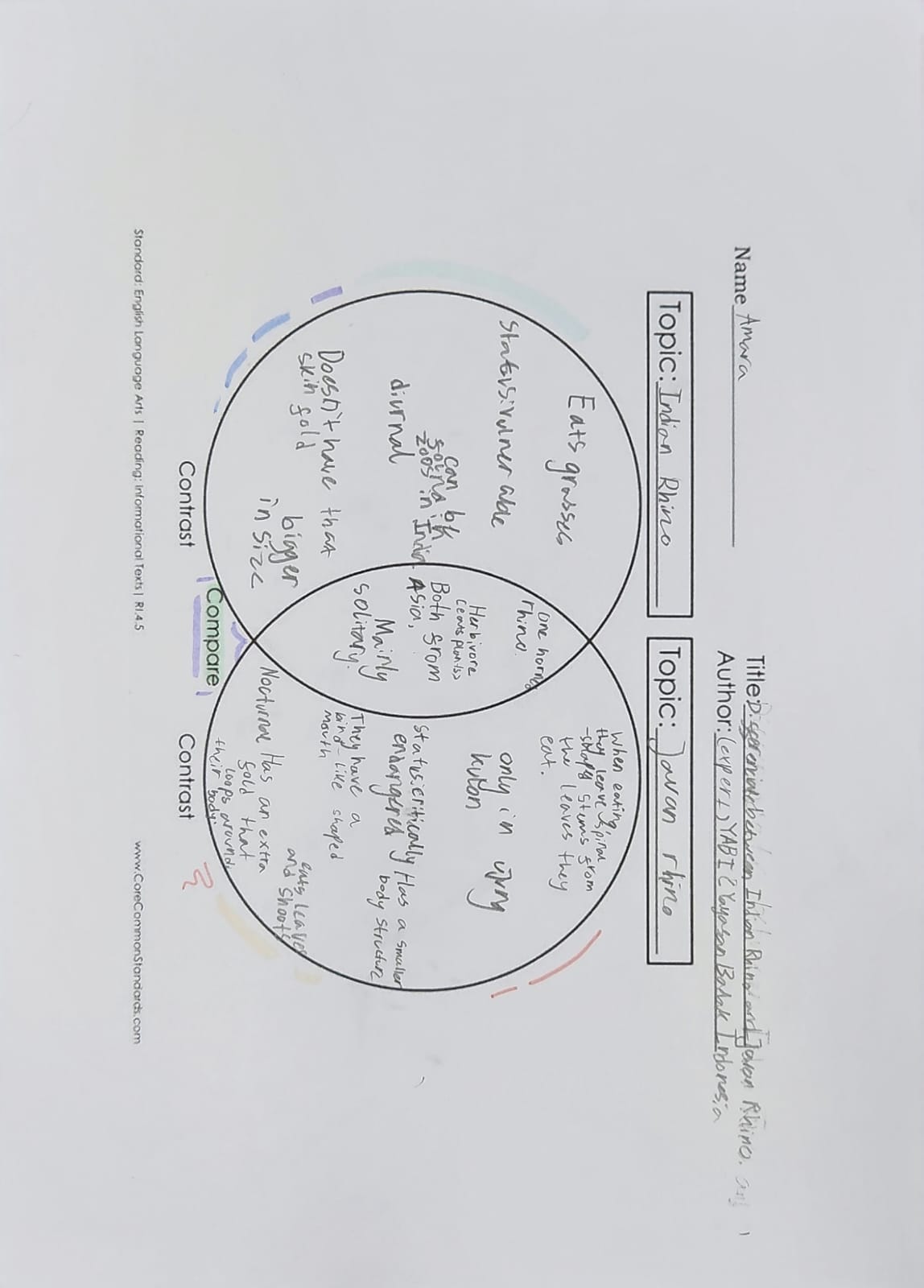
Collecting Data and Reporting Findings or Researching and Seeking Information
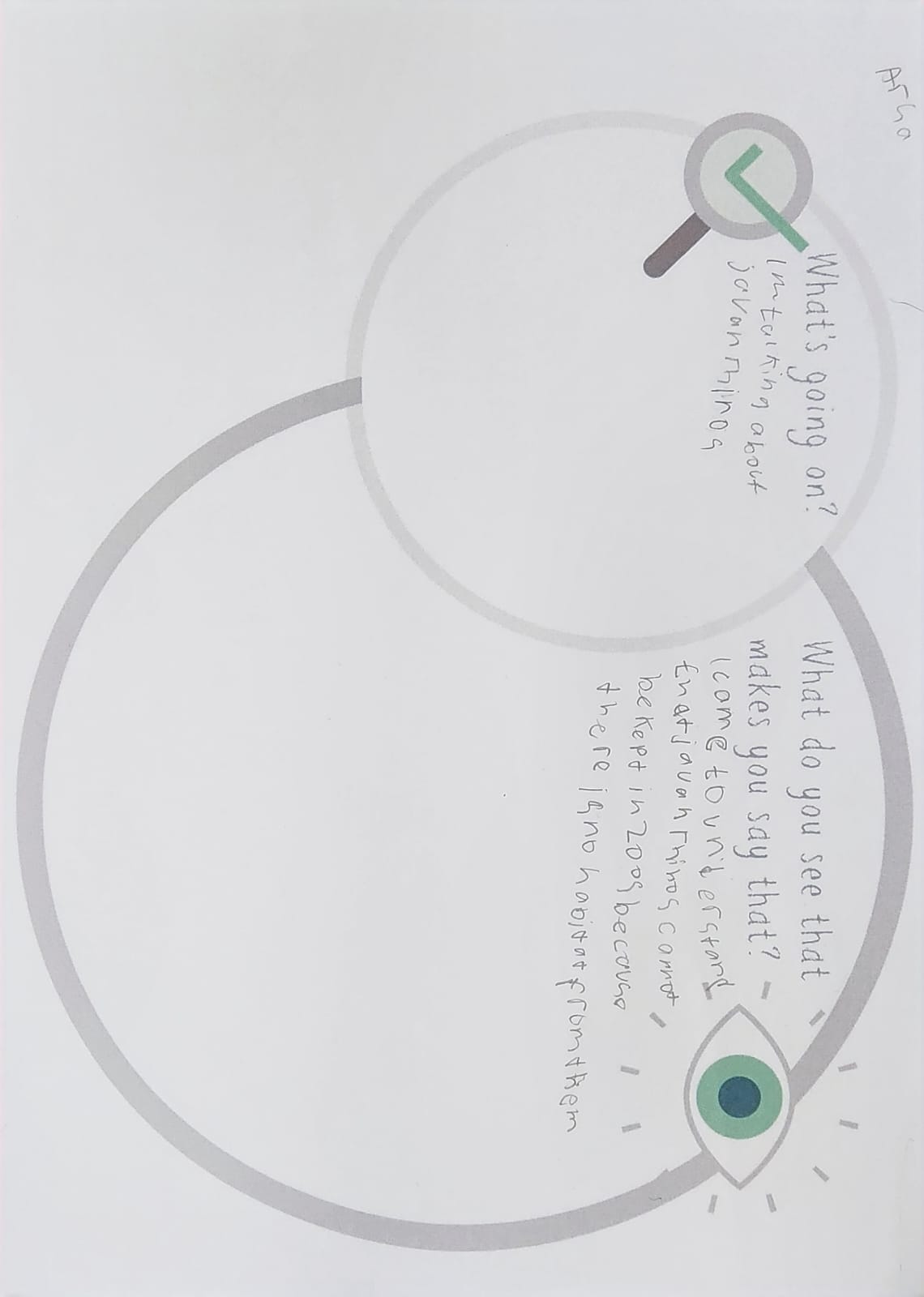
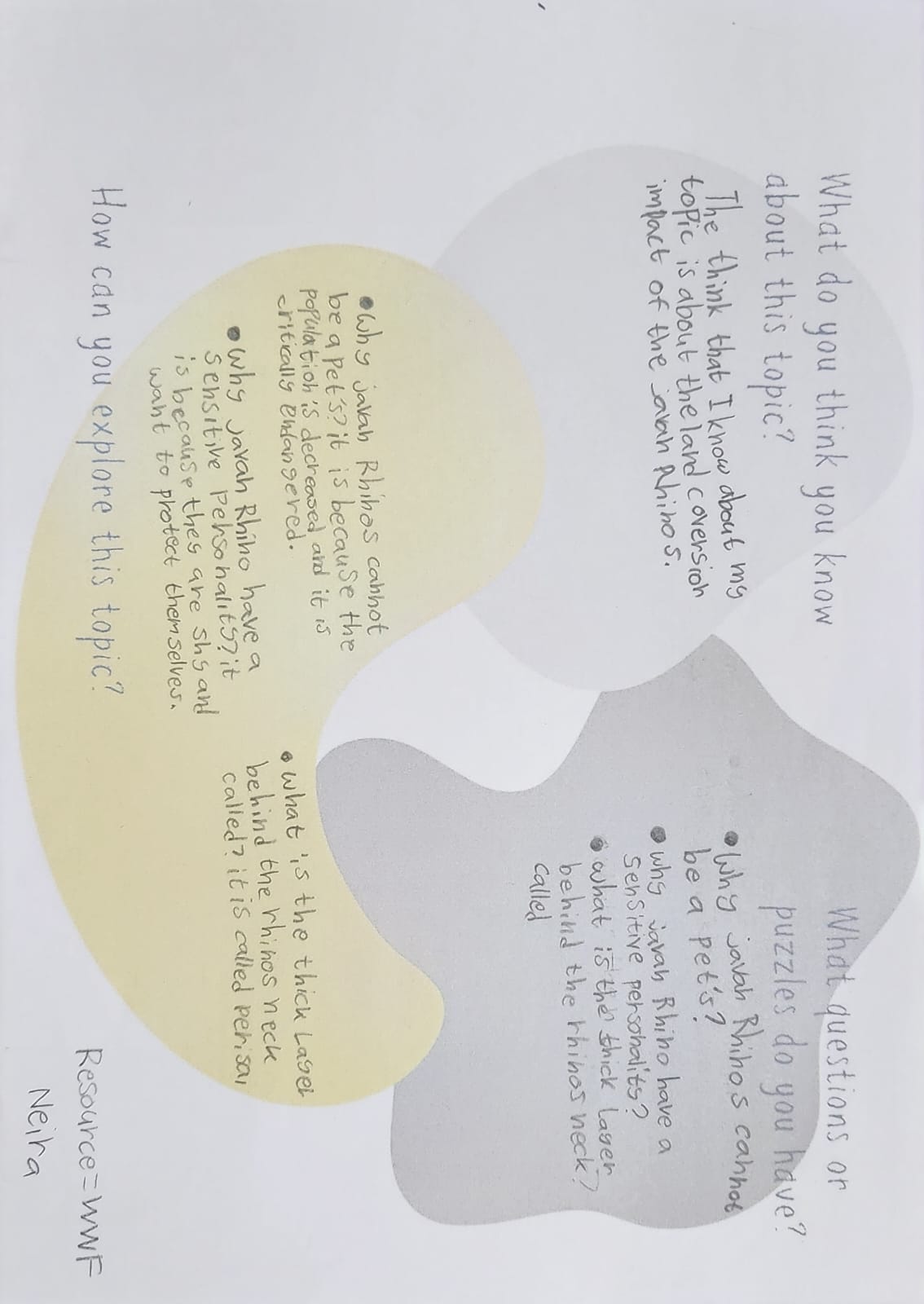
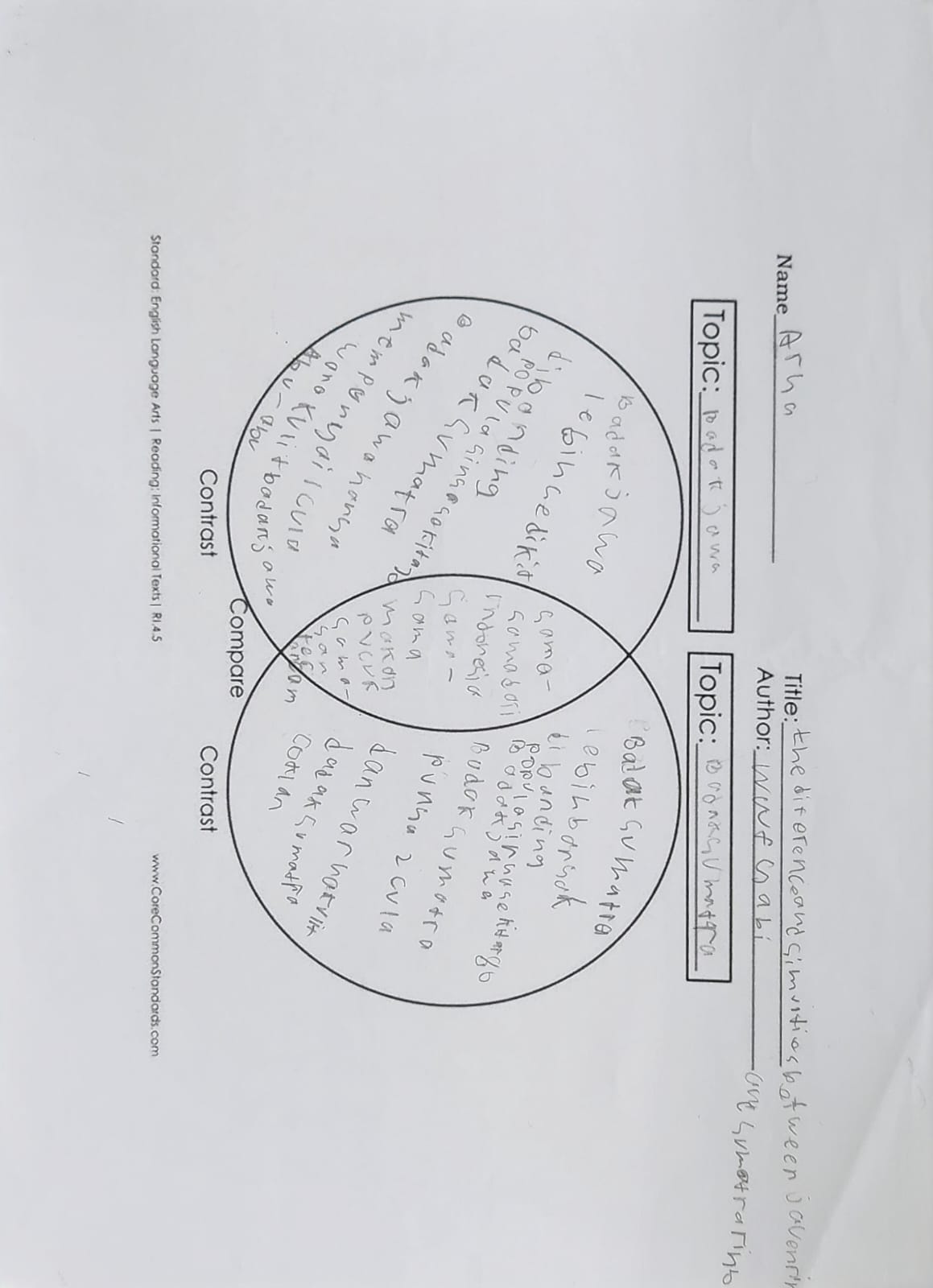
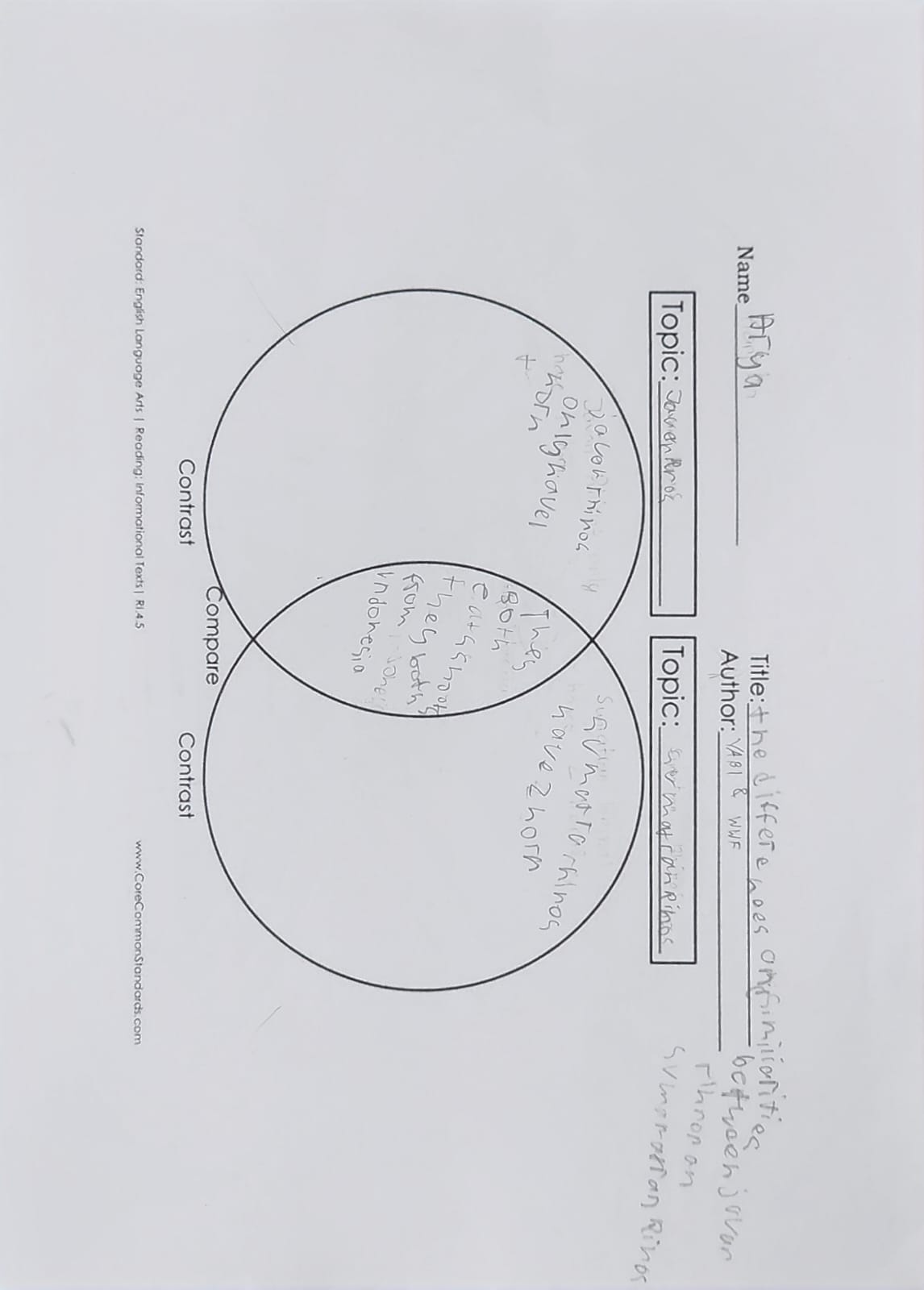
To answer all of our questions we collected in Step 1, we interviwed the experts about Javan Rhinos. We gained many new insights about the things we are curious about and things we could possibly do as our action,
Bogor Zoology Museum is a museum located to the next of the main entrance of the Bogor Botanical Gardens in the city of Bogor, Indonesia. The museum and its laboratory were founded in 1894 by government of Dutch East Indies during the colonial era. It contain one of the largest collection of preserved fauna specimens in Southeast Asia.
During the visit, we observe the specimens and the statue of Javan Rhinos. We also interviewed the Museum staff about Javan Rhinos.
After we did the interview with the experts, we gather and sum up our points of view about the knowledge through a reflection.


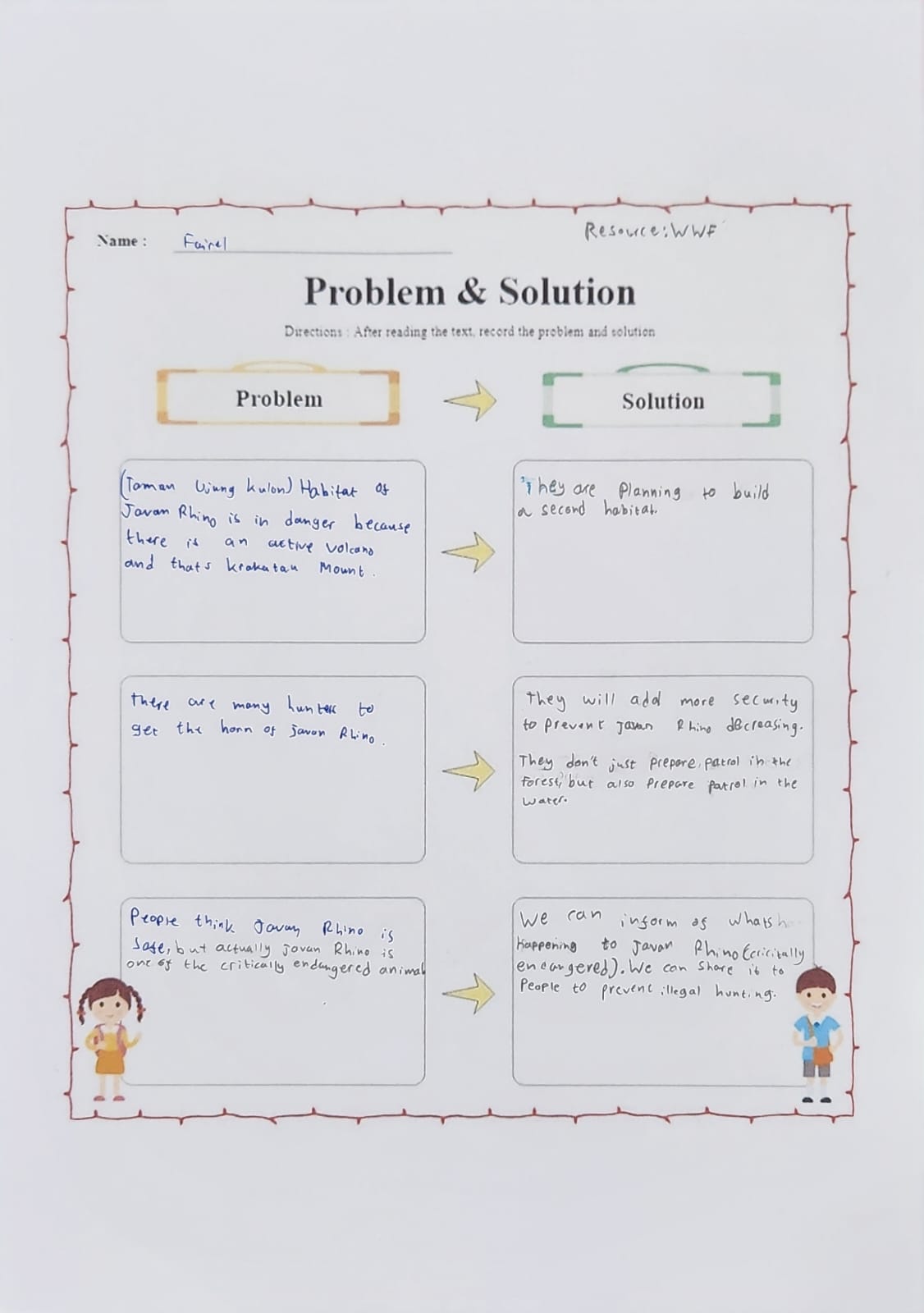

STEP iV:
Organizing Learning
Experimenting and Playing with Possibilities Solving Problems in a Variety of Way
We applied our research skills by conducting a survey to Al Jabr Learning Community whether they know information about Javan Rhinos or not. Unfortunately, students’ awareness towards the life of Javan Rhinos are low. Through our survey to 100 respondents of Al Jabr PYP Students it is stated that:


Social Experiment to Lower Grade Students
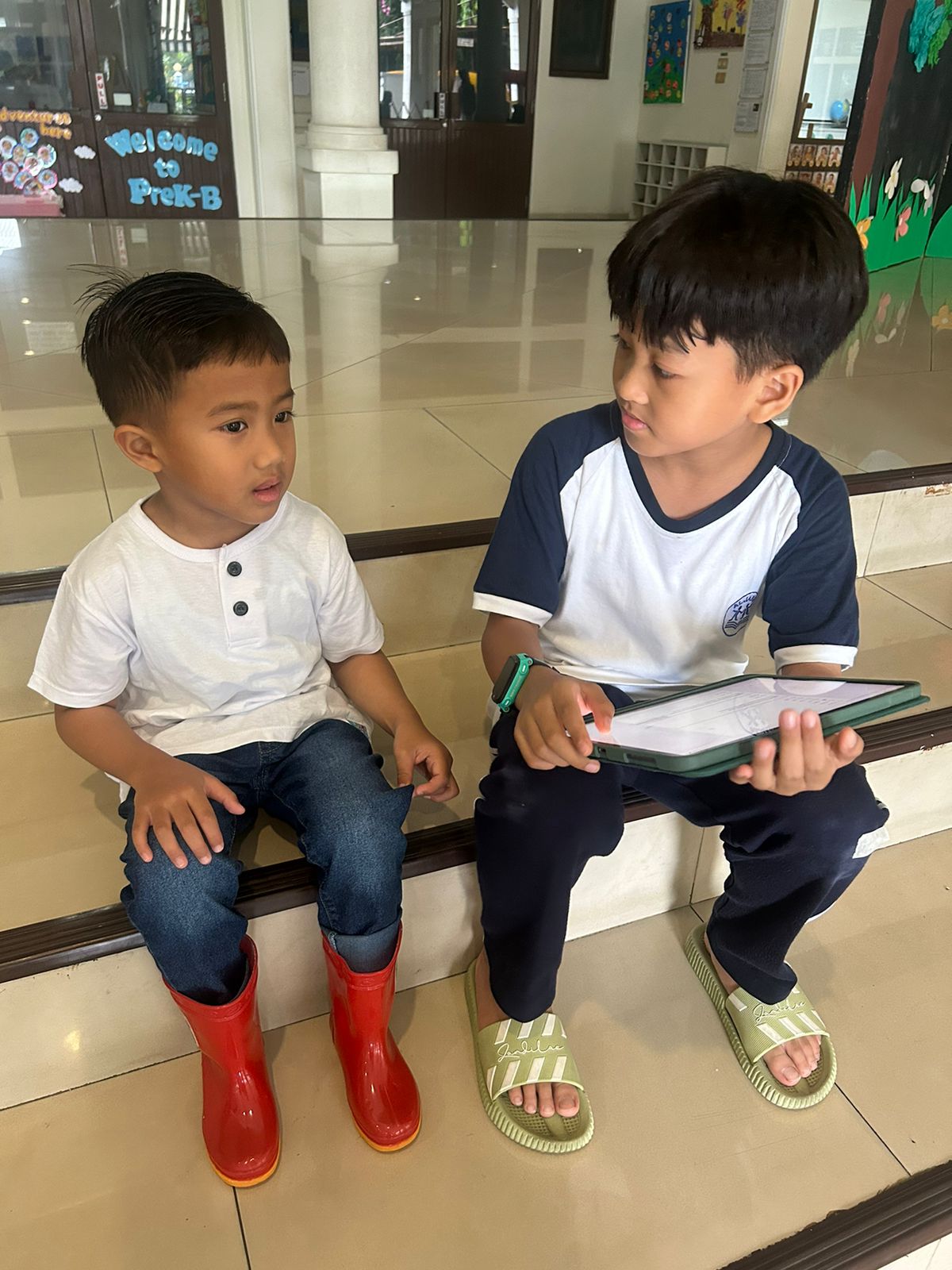
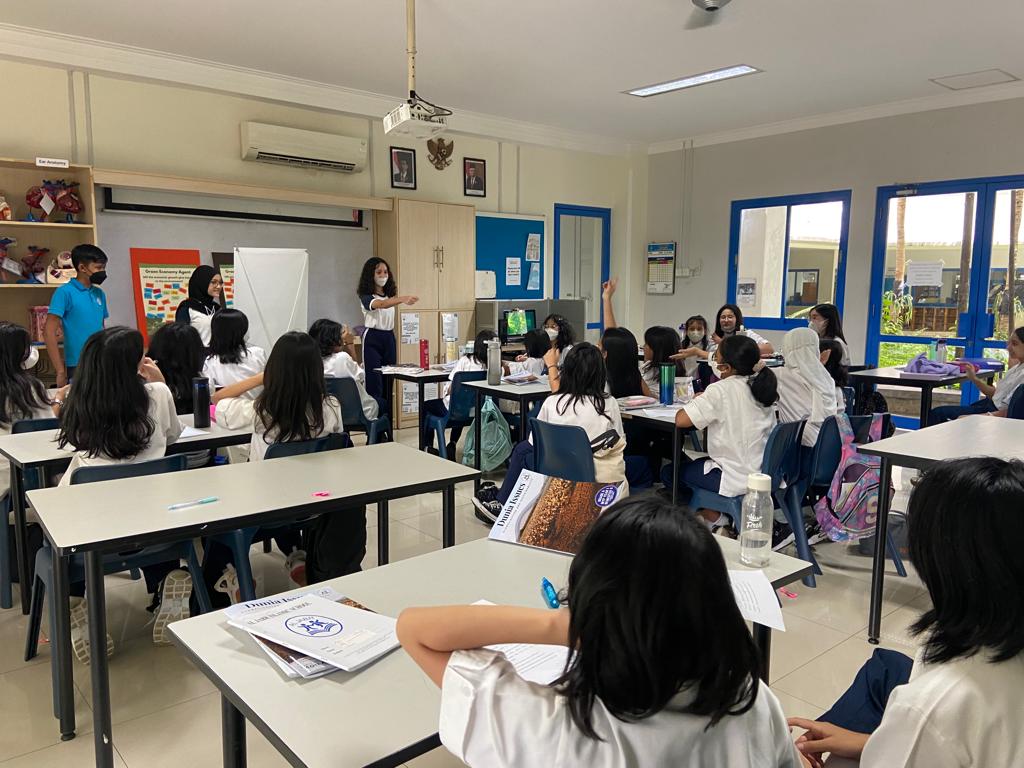
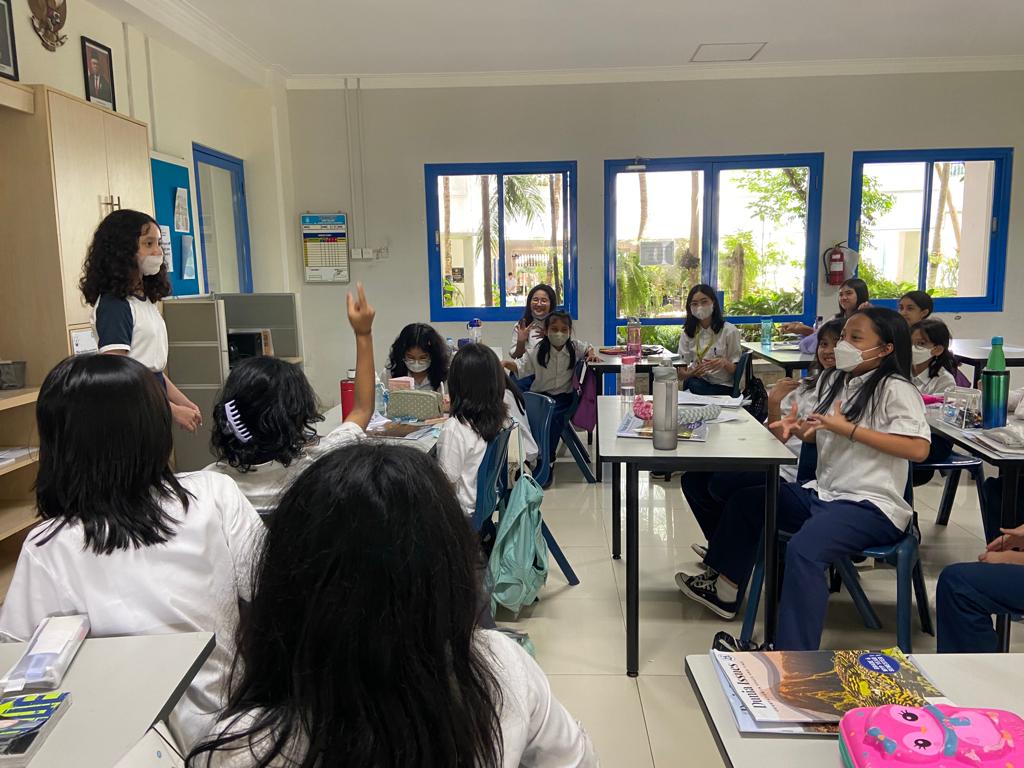
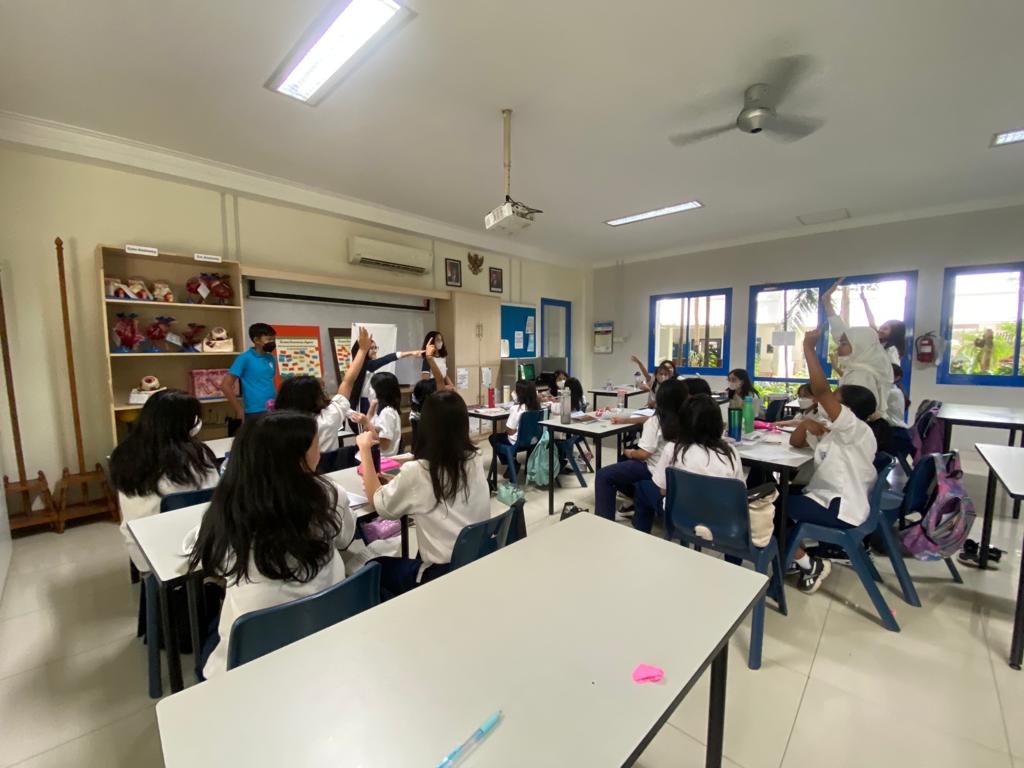
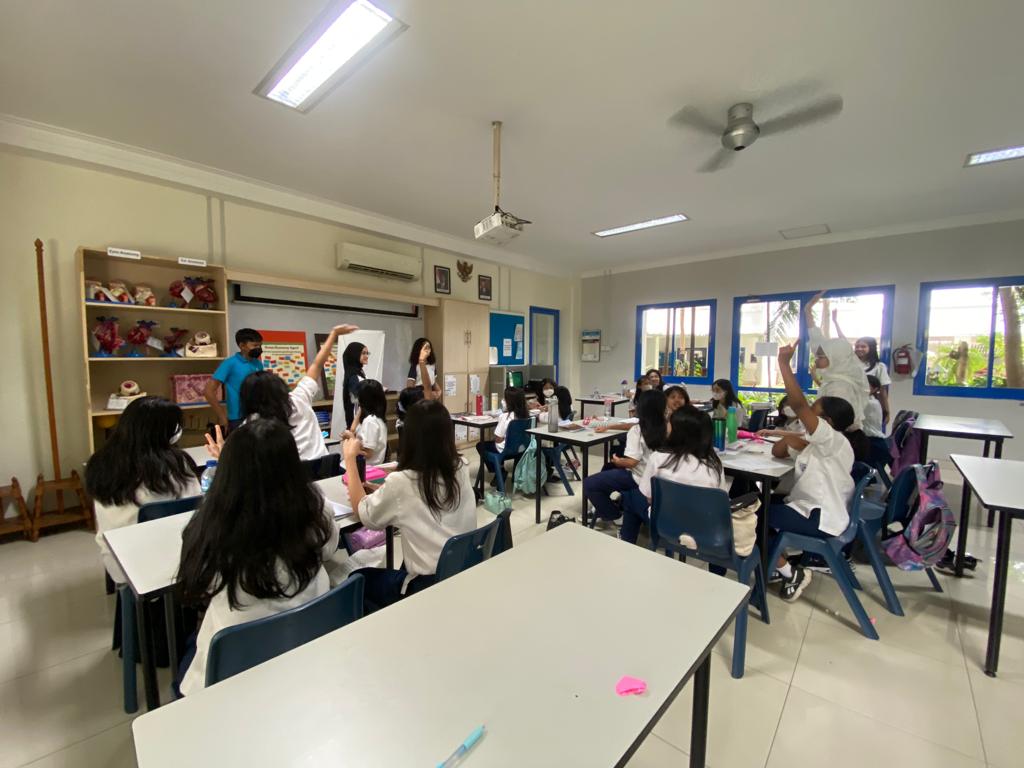
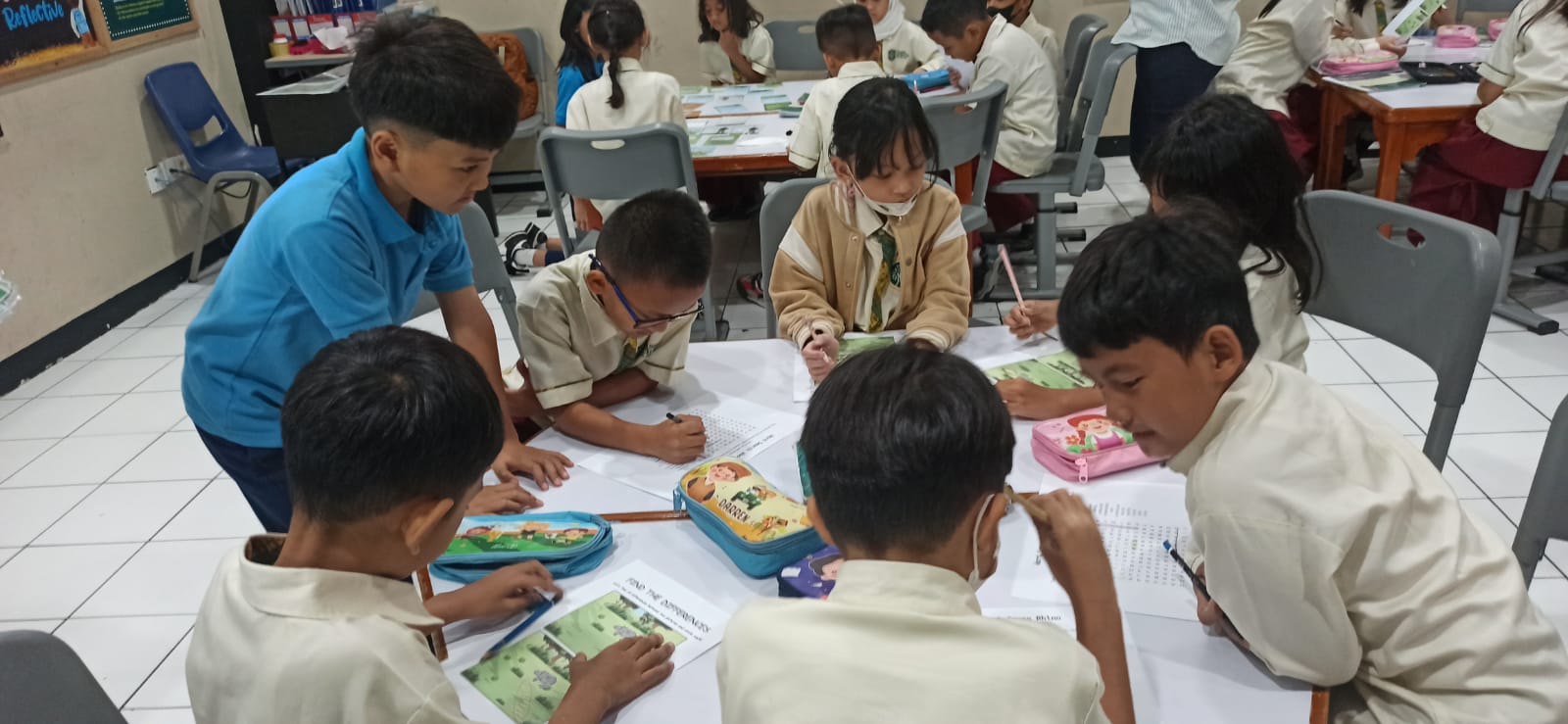
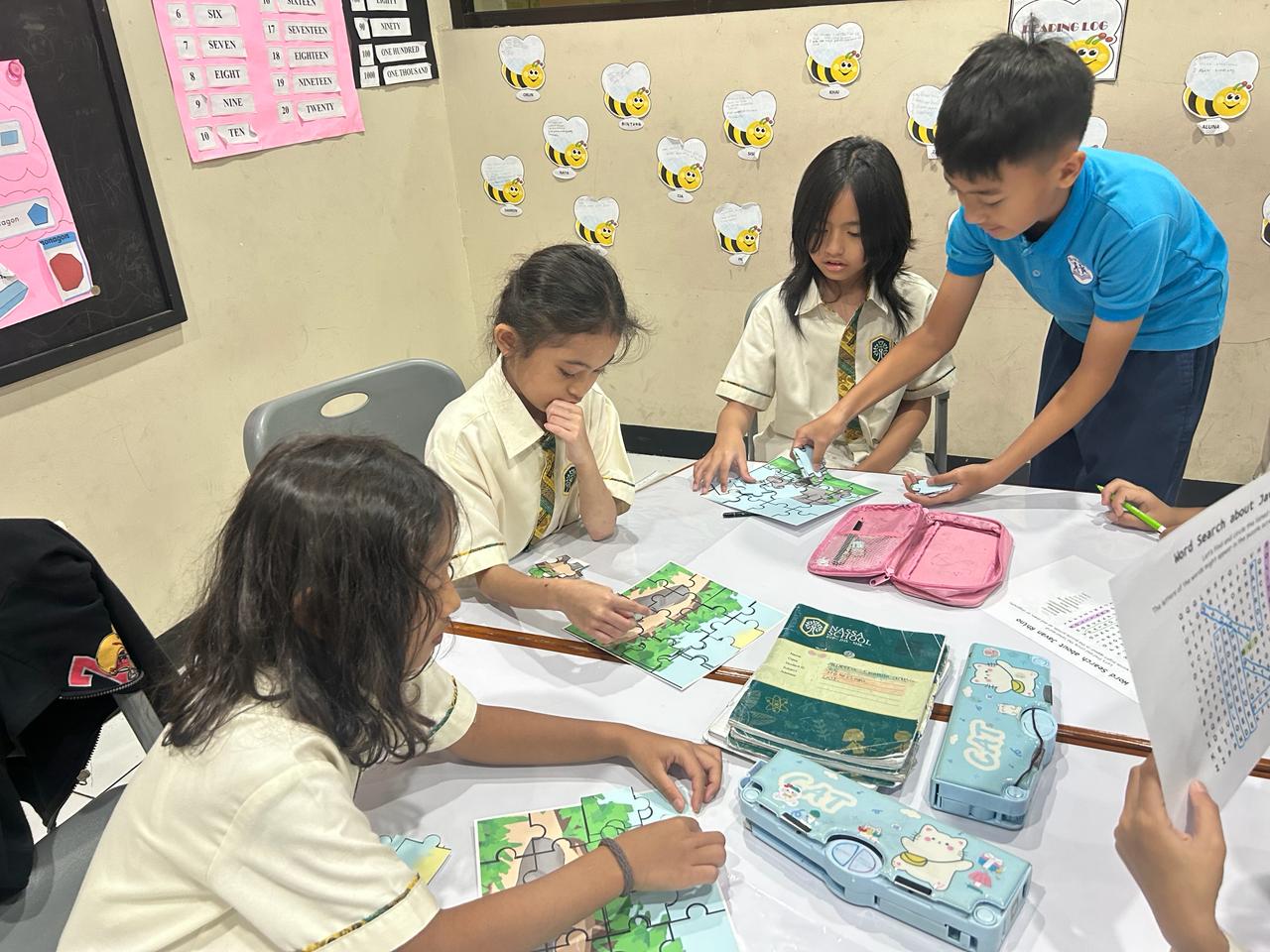
To get a deeper understanding of our topic, we also did a social experiment by asking questions about Javan Rhinos to Pre-K and K1 students.




Social Experiment to Upper Grade Students
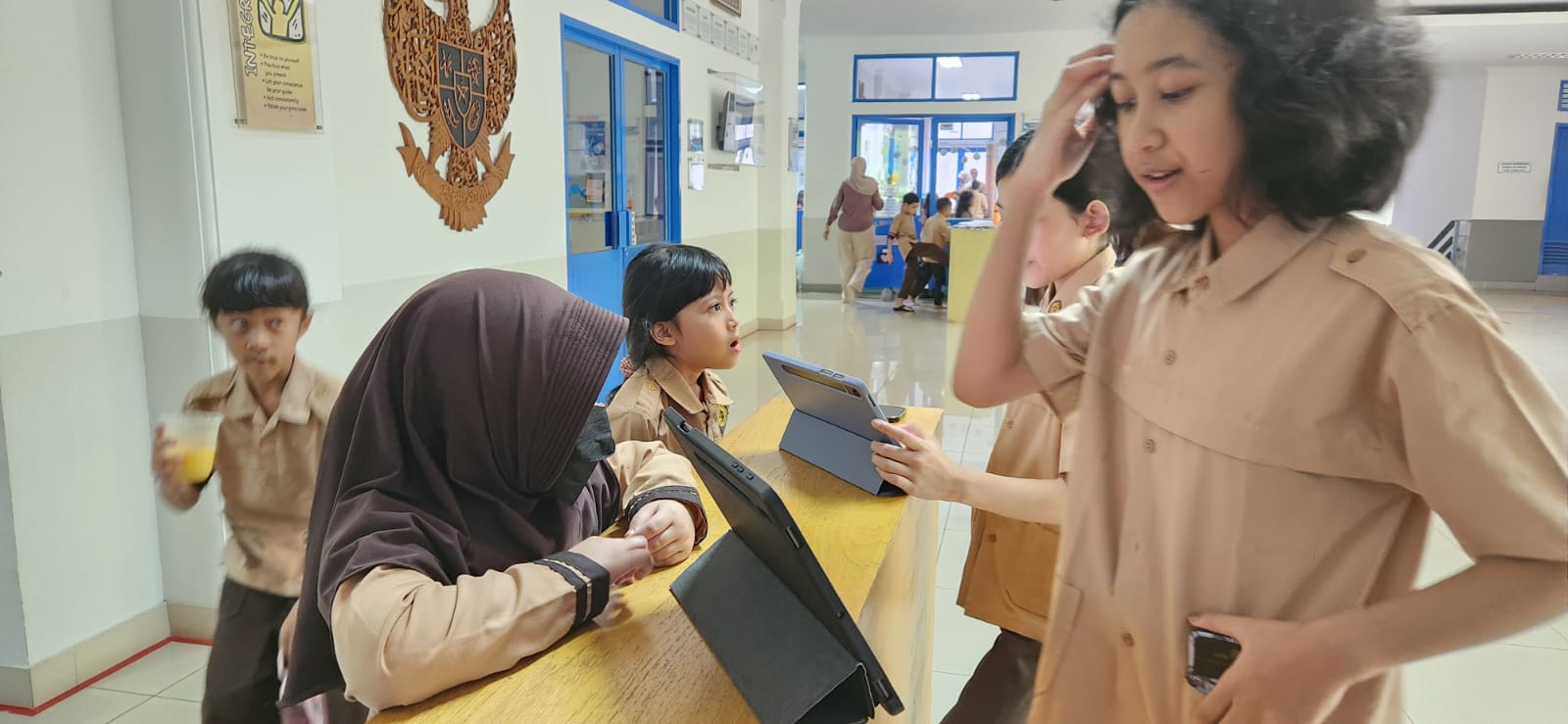
To get a deeper understanding of our topic, we also did a social experiment by questions about Javan Rhinos to Grade 2 students.



Social Experiment to Community Outside Al Jabr
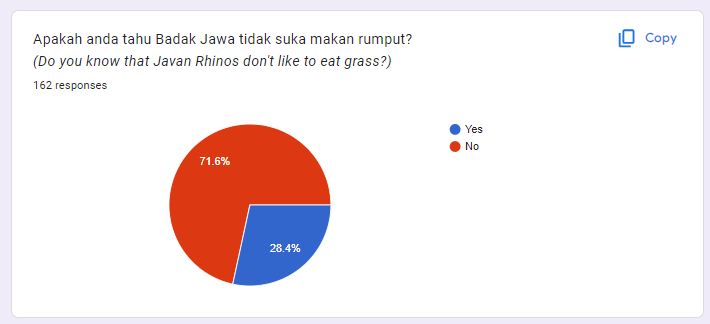
We also conduct a survey to people outside Al Jabr. We want to know if they aware of Javan Rhinos are critically endangered or not. We got 162 respondents and the data stated that, people know that the life of Javan Rhinos are critically endangered, however they do not know to to help them. Here’s the detail:




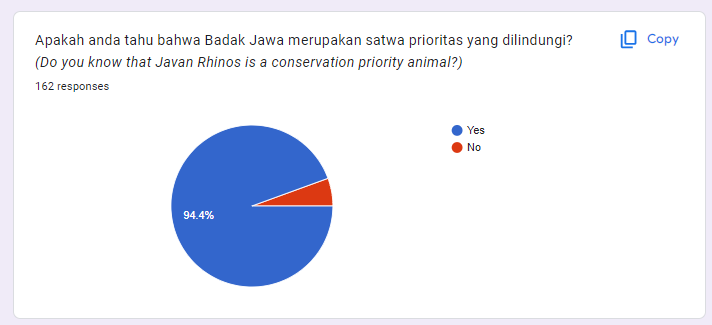
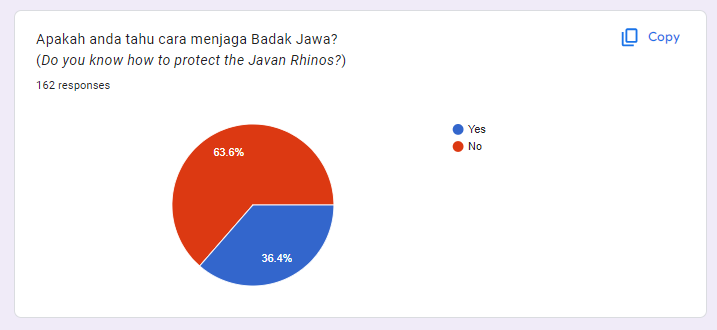
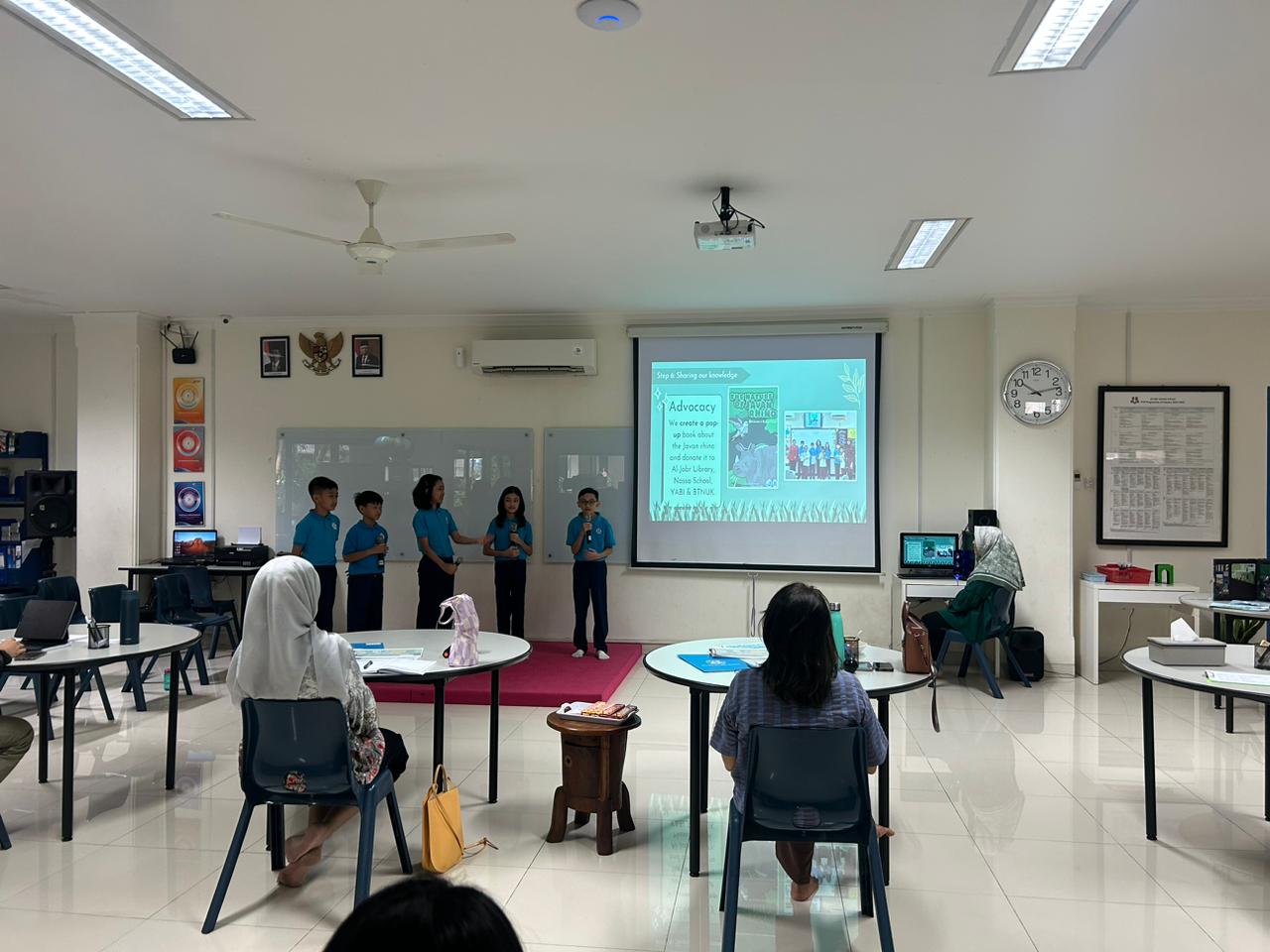
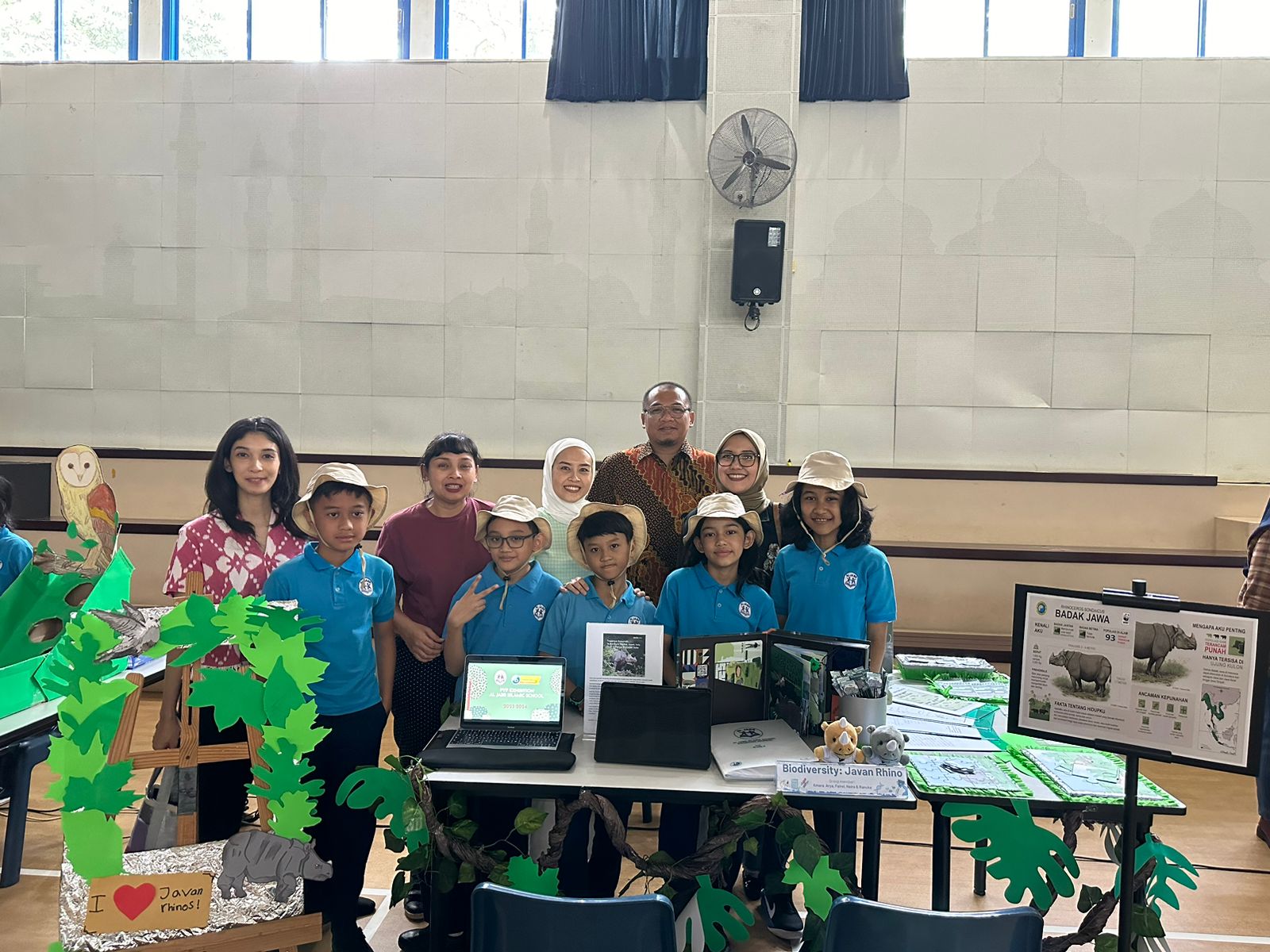
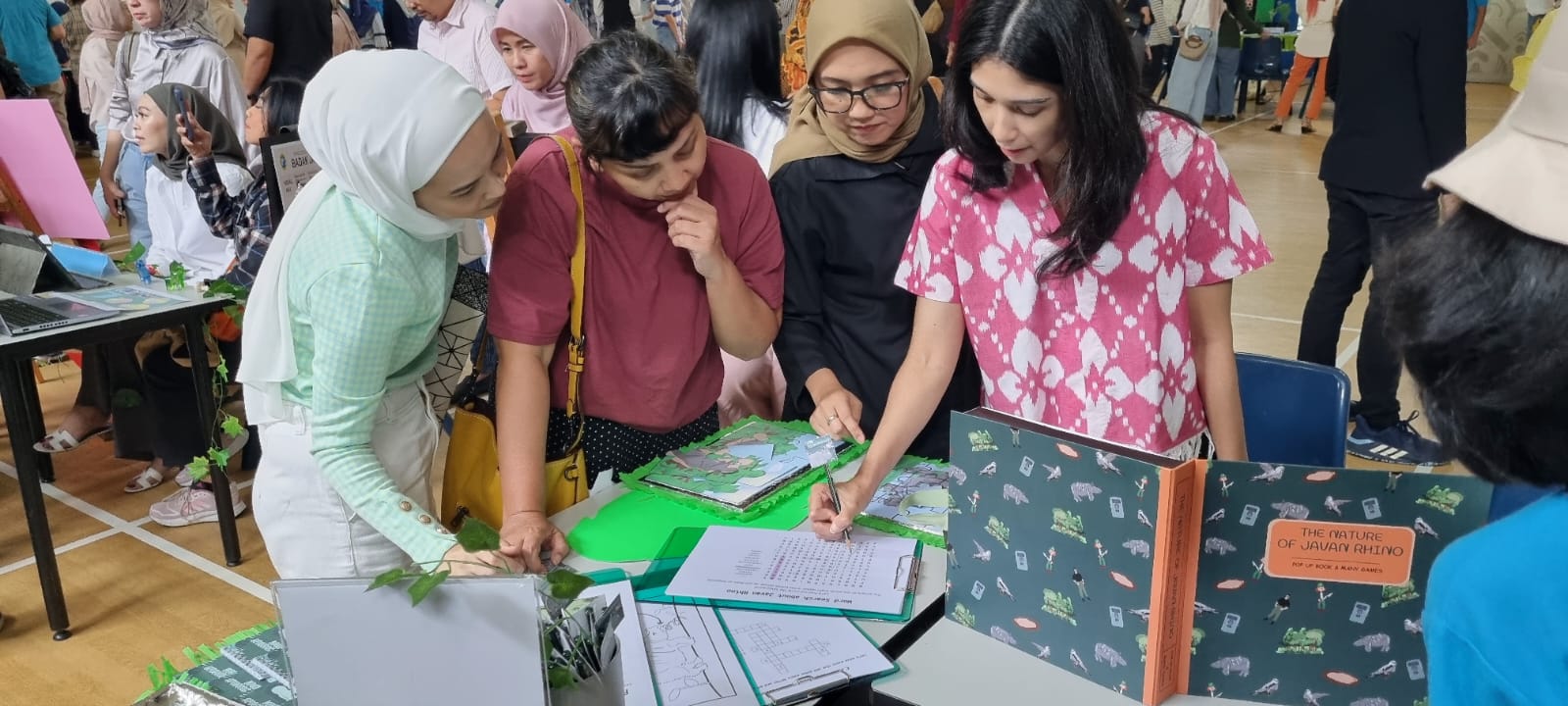
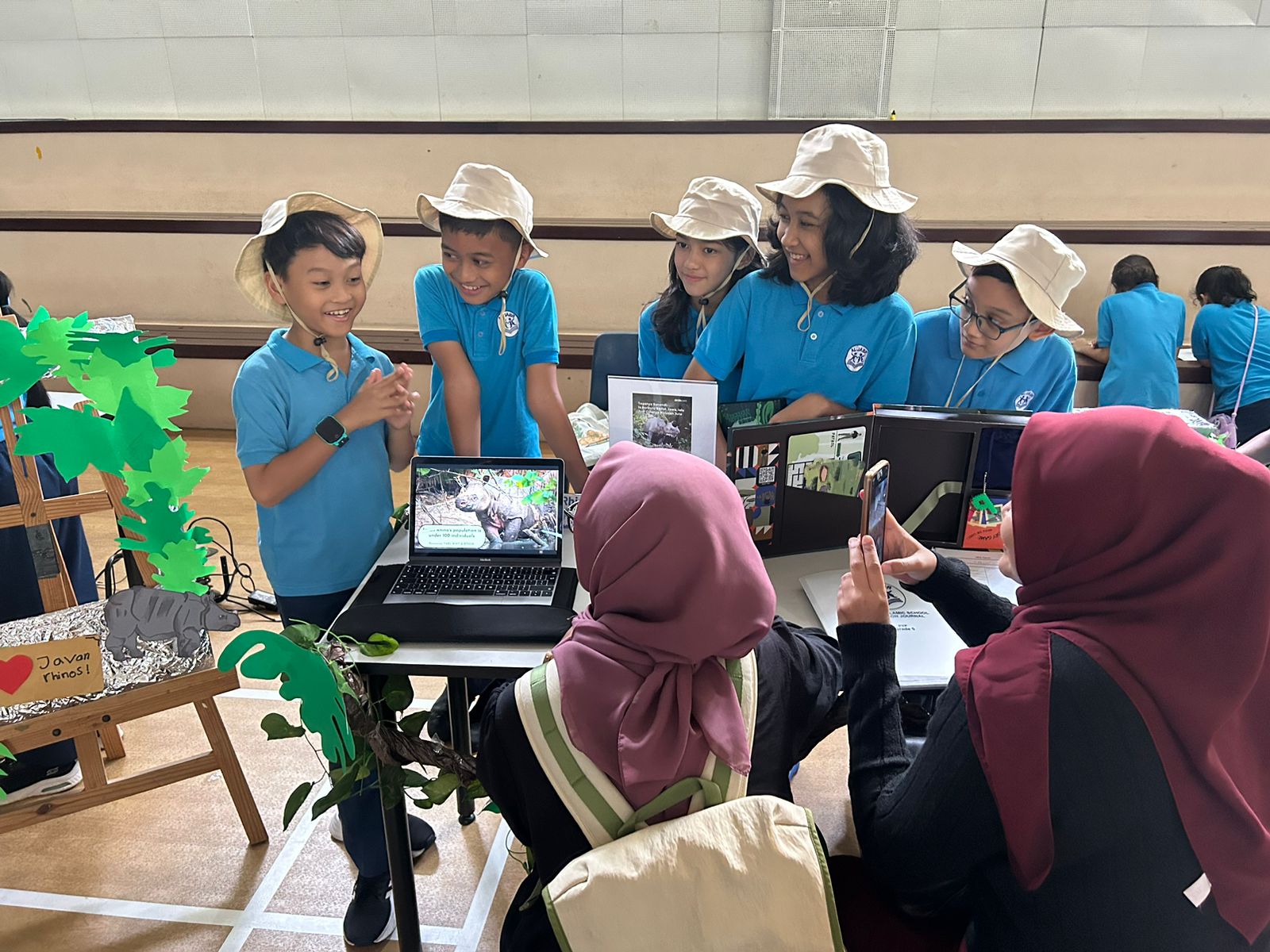
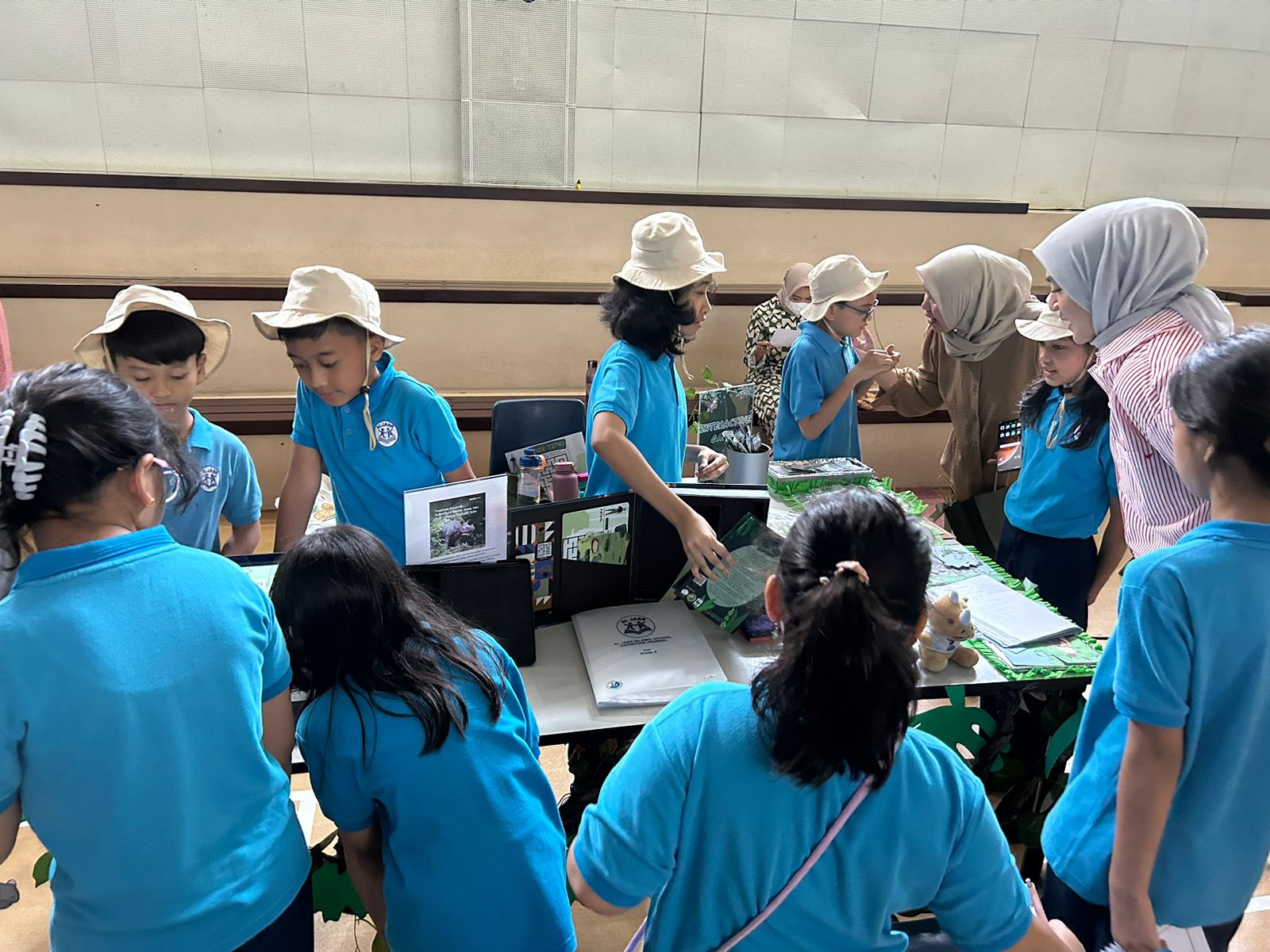
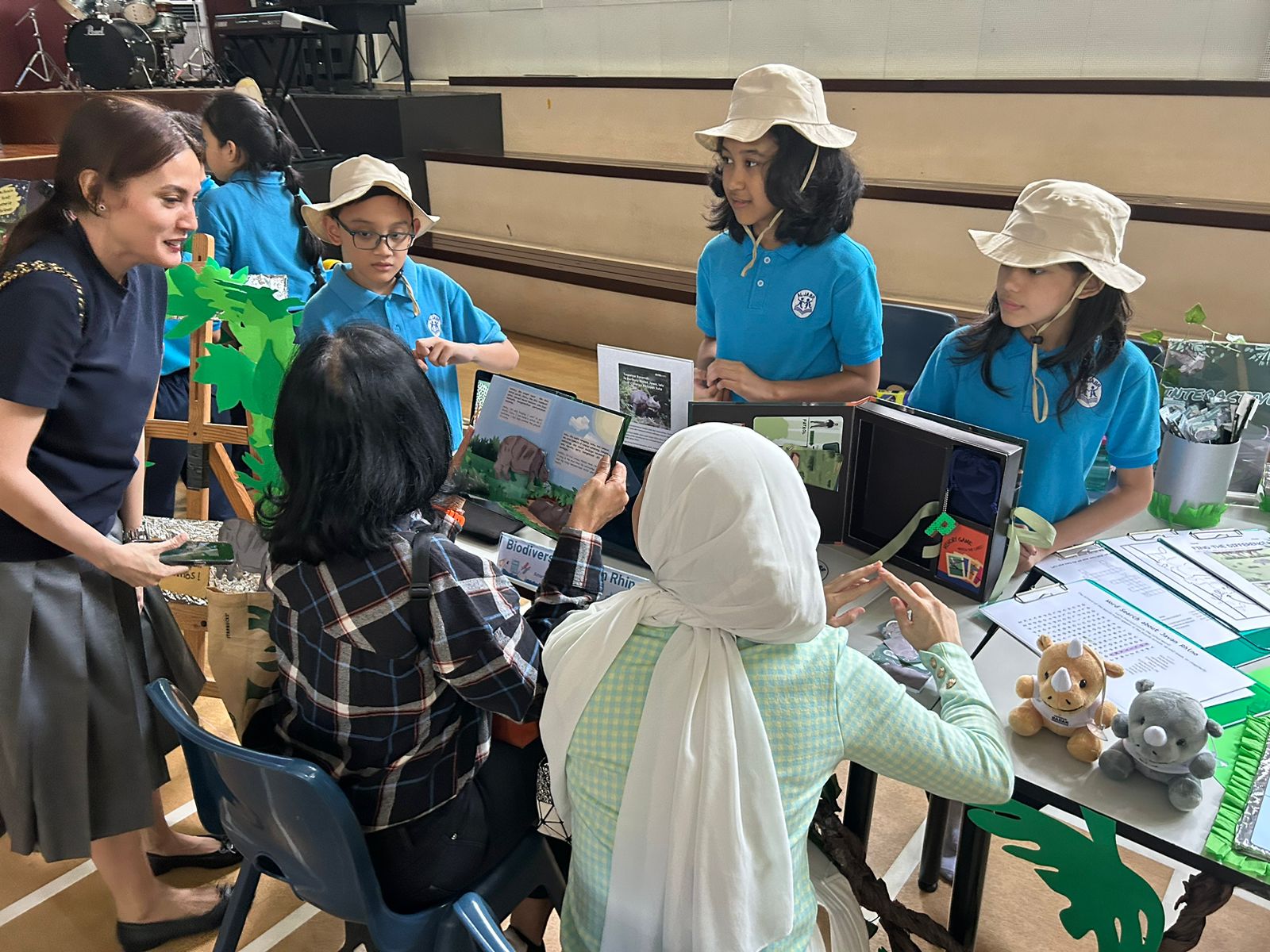
We decided to do action of participation and advocacy. We educated the Al Jabr Learning Community as our Participation and Advocacy Action about the Javan Rhinos, shared our survey results to the Al Jabr learning community and raised awareness about how small actions can have a big impact on the life of Javan Rhino.
Action Preparation


SELF-ASSESSMENT
Our exhibition is success for us because:
- We got lots of respondents during the social experiment.
- We can explain and educate others about Javan rhino and its habitat.
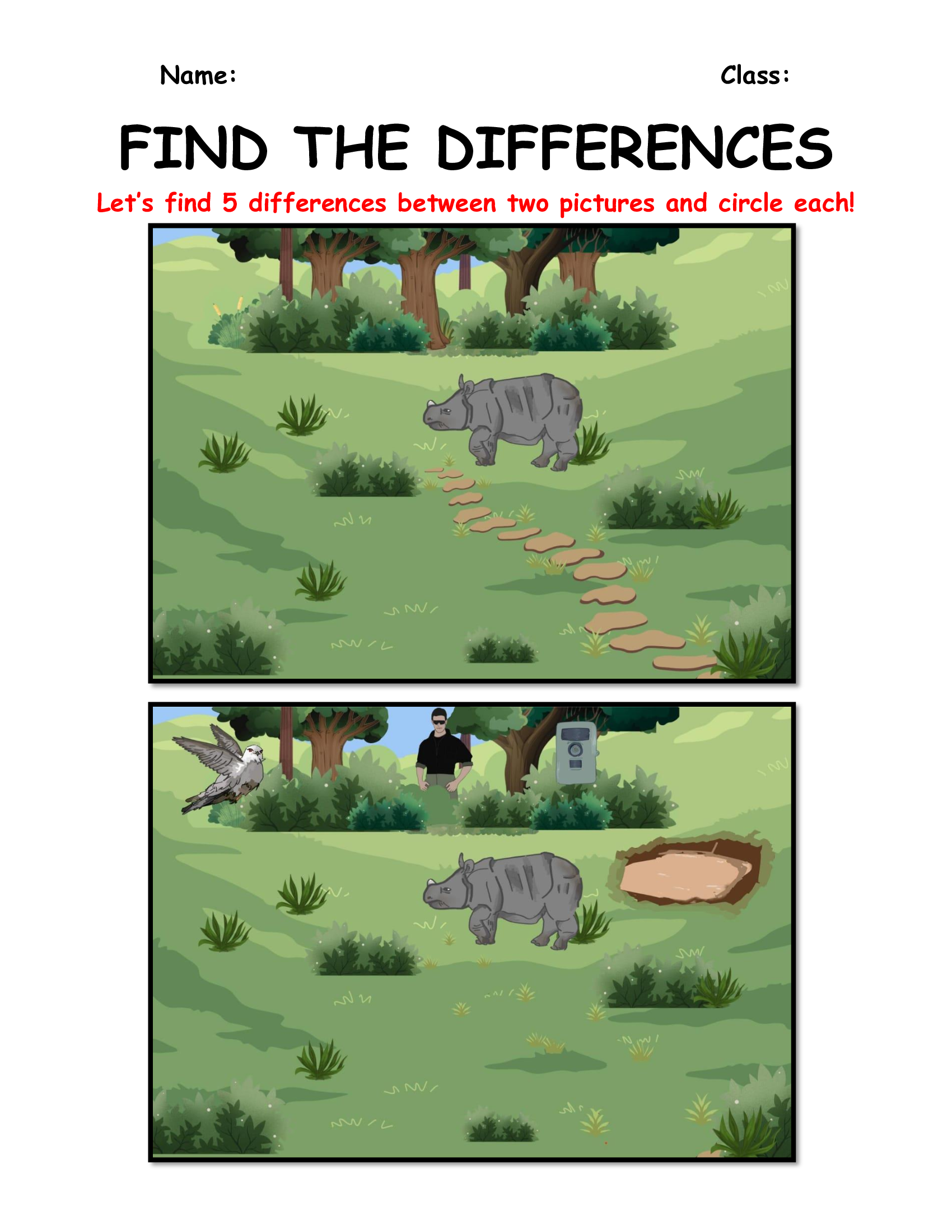
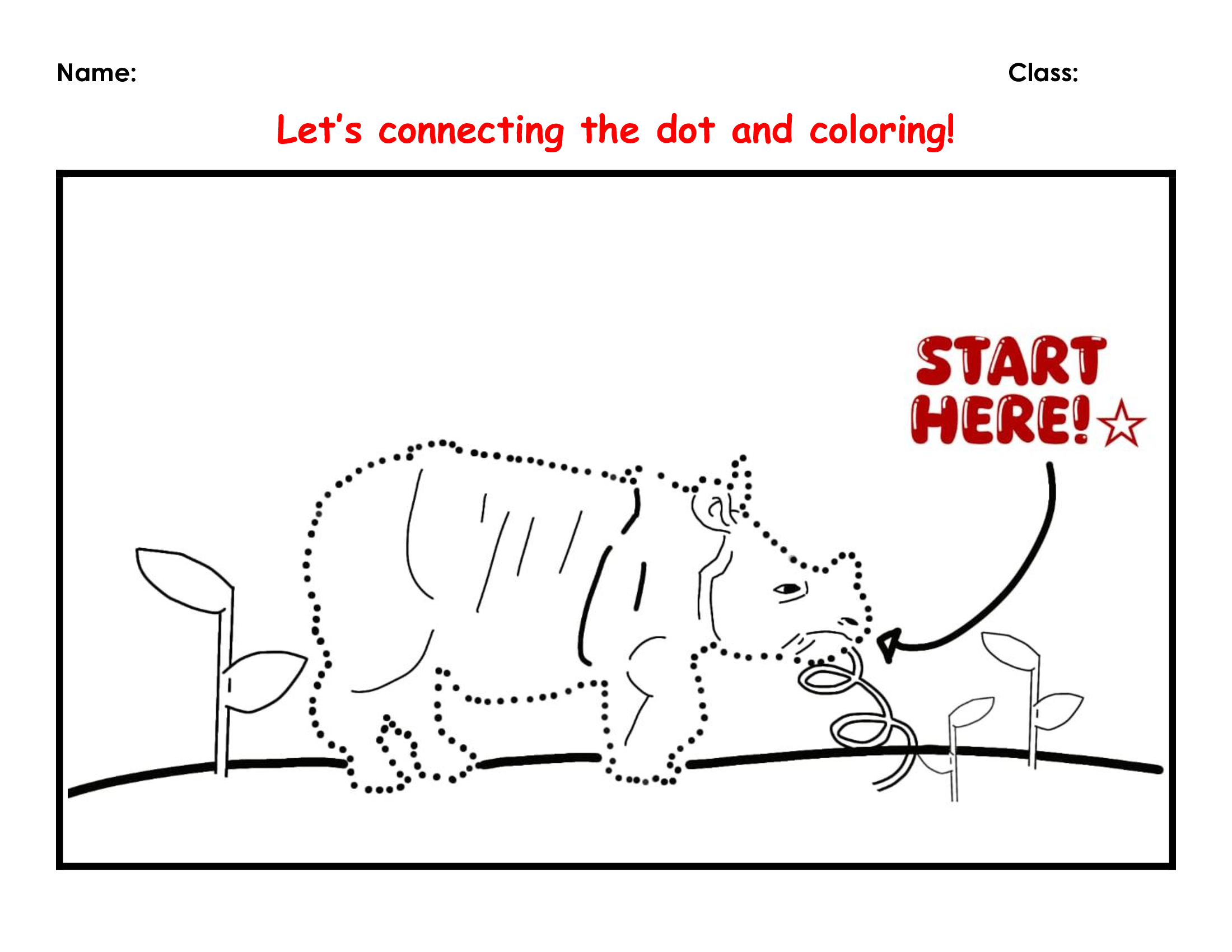
- We can create games, video, and pop-up book.
- From our action, respondents understand the importance of protecting Javan rhino.
3 things that we have learned are:
- We know the role of Javan rhino in their ecosystem.
- We know that land conversion affects Javan rhino.
- We learned ways to protect the Javan rhino.
We are happy because we can share awareness to other school and our Al-Jabr community.
STEP V:
Monitoring the Exhibition
Taking and Depending a Position
We monitor the progress of our exhibition project by joining a mentor meeting three times a week with all members and all mentors. We put ideas we had during discussions, we combined ideas and suggestions from our mentors and the experts in the exhibition journal.
Discussions


















REFERENCES
- Alikodra, H. S. (2013). Teknik Konservasi badak Indonesia. Literati.
- Pahlevi, R. (2017). Badak Jawa Hewan si Cula Satu (Ser. Seri Fabel Nusantara). Wafi Mediatama.
- Yayasan Badak Indonesia
- Balai Taman Nasional Ujung Kulon
- World Wide Fund
- Museum Zoologicum