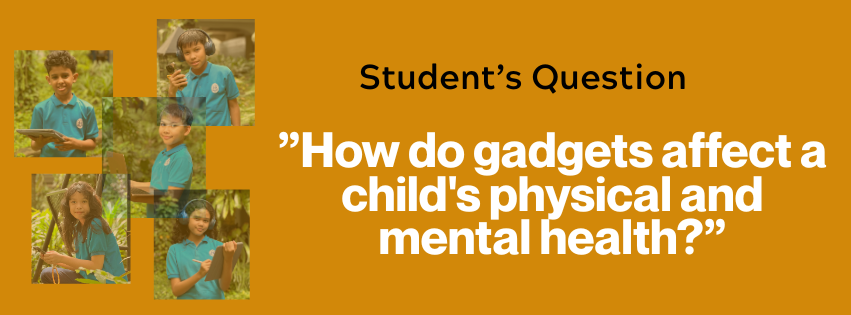
“Are gadgets helping your child grow… or holding them back?”
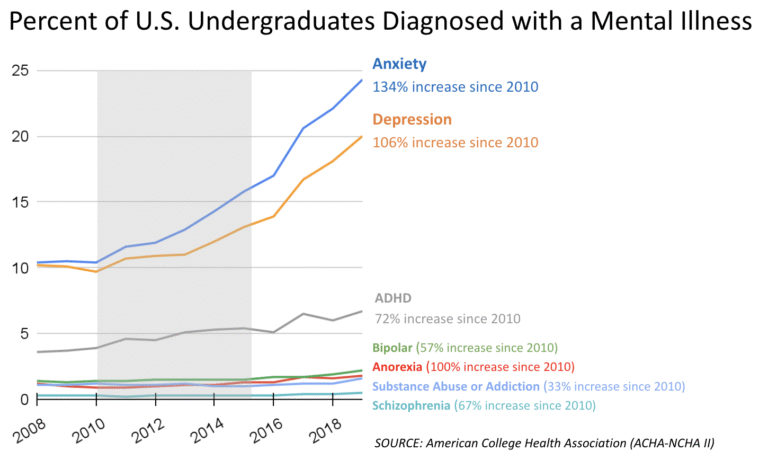
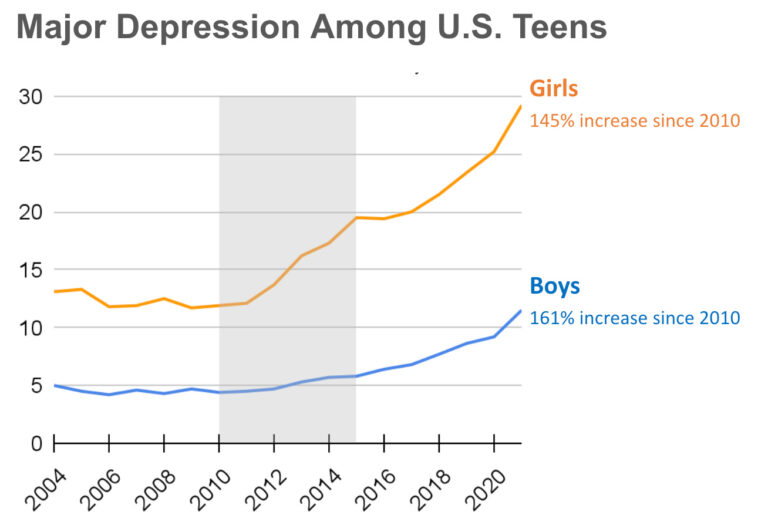
Based on data from the book The Anxious Generation shows that more students in the U.S. have experienced mental health problems over time. From 2008 to 2019, the number kept going up. The biggest increase is in anxiety, with many more students feeling worried or nervous than before. Depression has also increased significantly, meaning more students feel very sad. In 2010, Apple released smartphones, and in the following years, social media began to grow rapidly. This development may have contributed to a sharp rise in anxiety among students. According to research, girls are more likely to experience depression related to gadget use compared to boys. In conclusion, more and more students are facing mental health challenges, especially anxiety and depression.
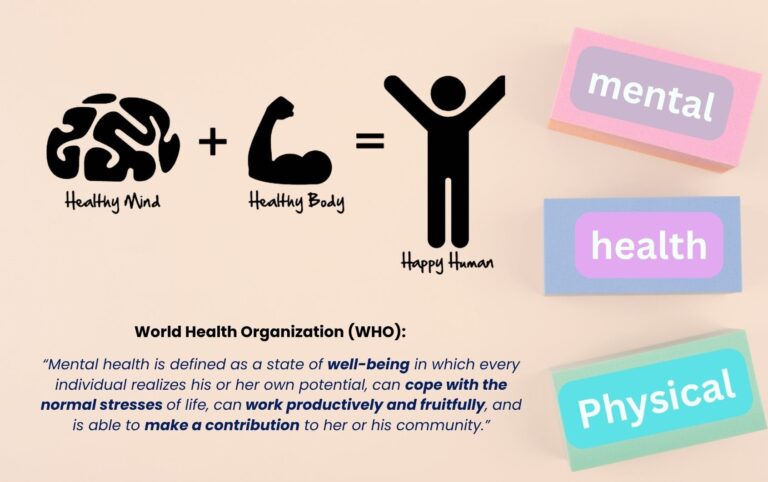
What isPhysical and Mental Health?
When our minds and bodies are healthy, we can lead a happy, steady life.
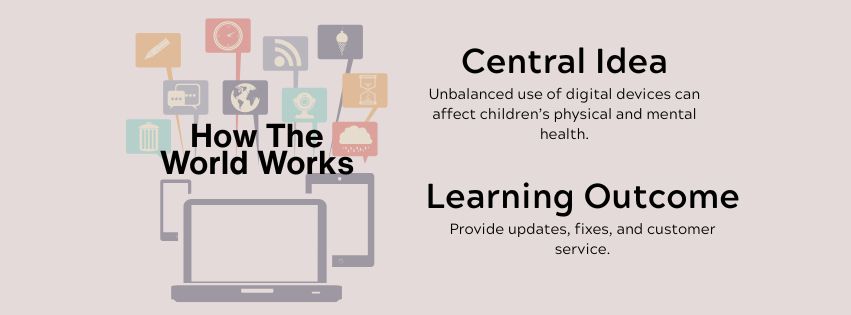
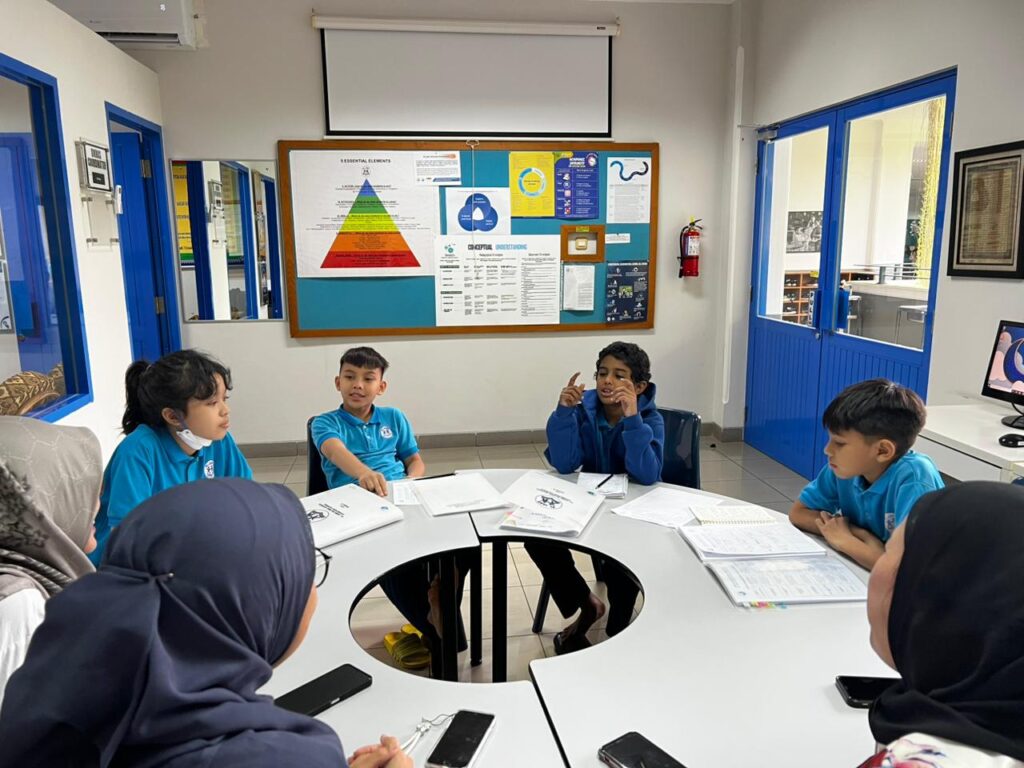
At the start of the exhibition, we work together to identify issues that are relevant to our lives, create the central idea, and organize our inquiry process.
Lines of Inquiry
How and why do children use gadgets in their daily life.
The change of learning behavior due to digital devices.
Ways to create healthy gadget routines that support physical and mental health
Specifeied Concept
Causation
Change
Responsibility
Additional Concept
Habit: Gadget addiction, can negatively impact both physical and mental health.
Emotional and physical health: Overuse of digital devices can lead to significant changes in a child’s behavior.
Prevention: Strategies to prevent negative physical and mental health outcomes.
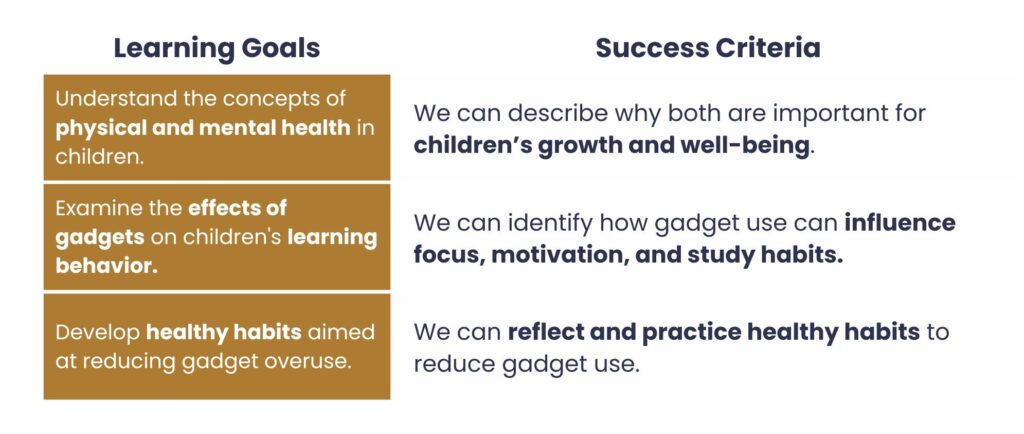
After we set up the Central Idea, Learning Outcome, and Lines of Inquiry, we create the learning goals and the success criteria that we want to achieve.
We practice self-management by staying focused, organizing our work, and using our time wisely. We try our best to complete each task carefully and responsibly.
We use communication skills in the discussion to share ideas, listen to friends, and speak clearly. We also take turns and respect each other while learning together.
We show our research skills by listening carefully and writing important information. The children ask questions, take notes, and try to understand new ideas together. This helps the children learn how to find and use information in a good way.
IB PROFILE
We show the inquirers by asking questions and sharing ideas. We are curious and want to learn more by reading and speaking, and this helps us to understand new things and grow in knowledge.
We demonstrate our knowledge by learning from the online class and listening carefully. We use notes and pay attention to understand new ideas, which helps us to build strong knowledge every day.
We show the communicator by meeting an expert and talking about our topic. We also listen carefully and share ideas in a respectful way, and this helps us understand feelings and communicate better with others.
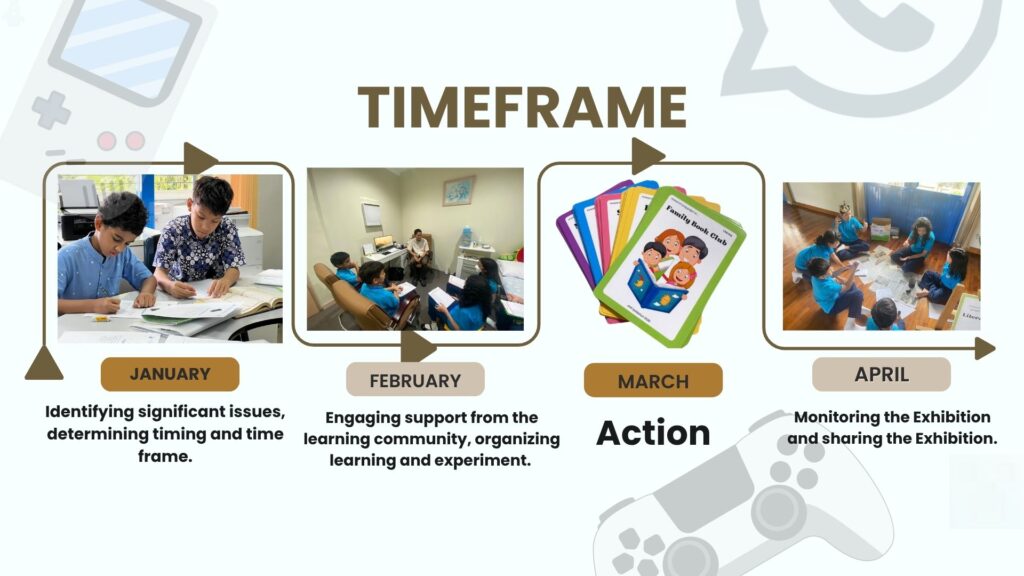
STEP 2: Determining Time Frame
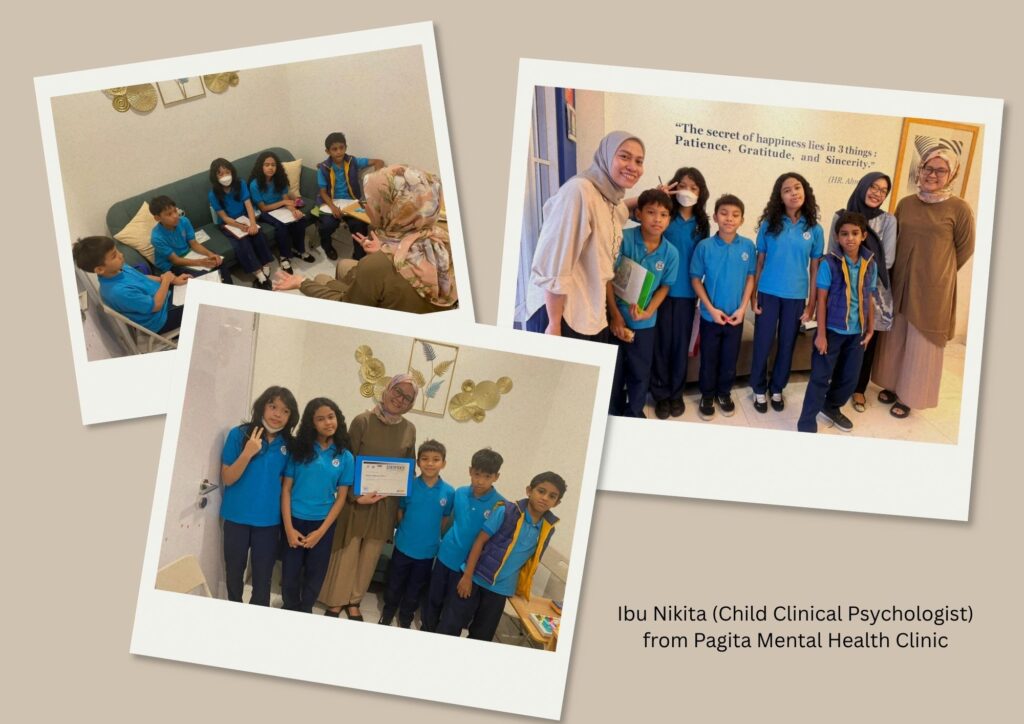
STEP 3: Engaging Support from the Learning Community
We met an expert psychologist to learn about how too much gadget use can affect our mental health. We asked questions and listened carefully to understand the impacts. From the psychologist, we learned that children should not use gadgets for more than 2 hours a day. This helped us understand how to take care of our minds and use gadgets wisely.
We met a pediatric doctor to learn about the physical effects of using gadgets too much. We asked questions and listened carefully to understand how our bodies can be affected. From the doctor, we learned that the blue light from screens can make our eyes tired and even make it hard for us to sleep. This helped us understand why we need to use gadgets wisely and take care of our health.
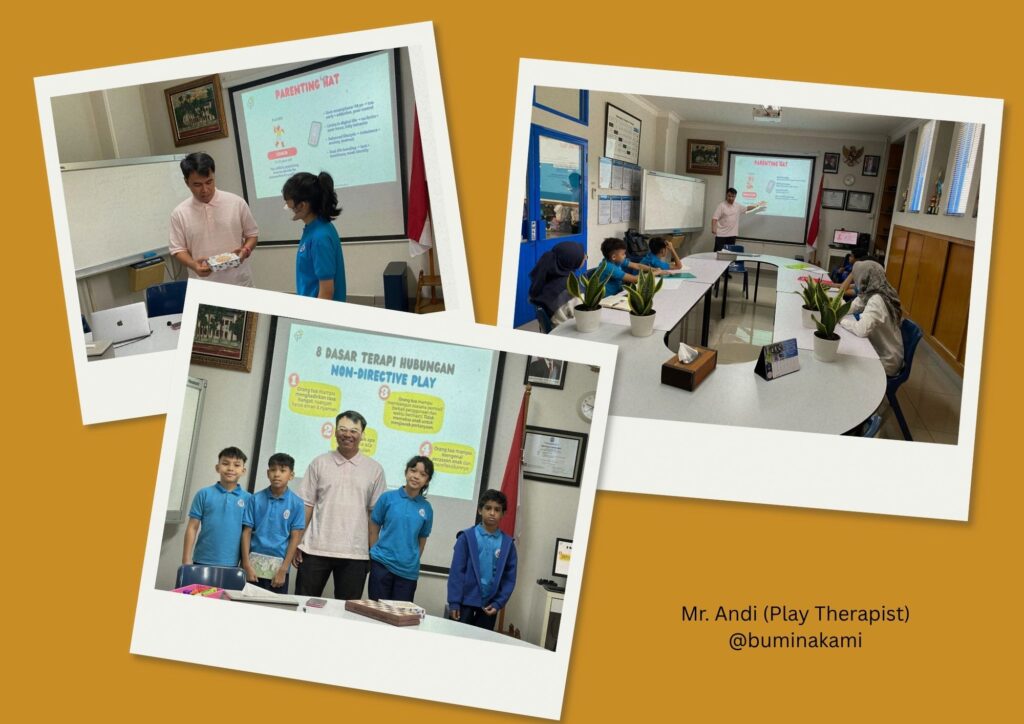
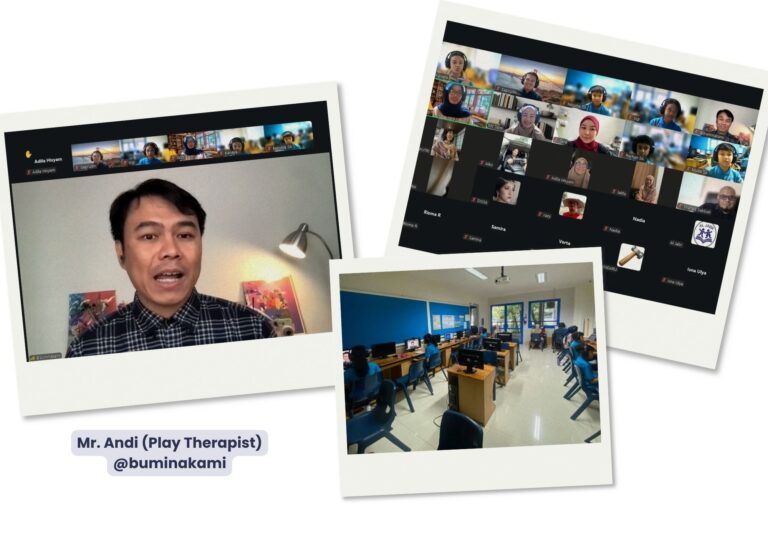
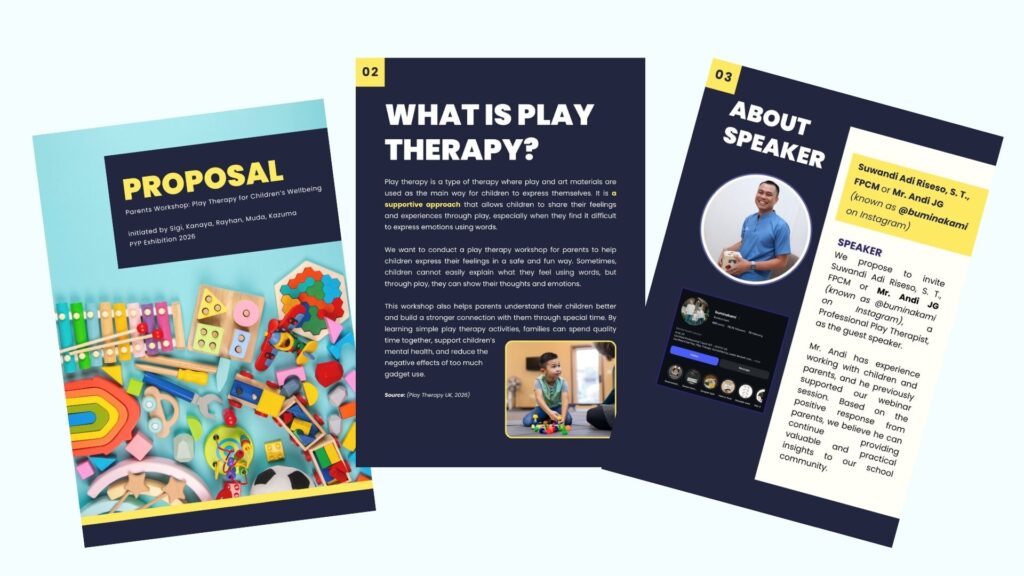
We met a play therapist to learn about fun activities we can do to reduce too much gadget use. We asked questions and explored different ideas together. From the play therapist, we learned that “special time” is a great activity to help reduce the overuse of gadgets. It is a time to play, talk, and connect with family in a happy and meaningful way.
STEP 4: Organizing Learning
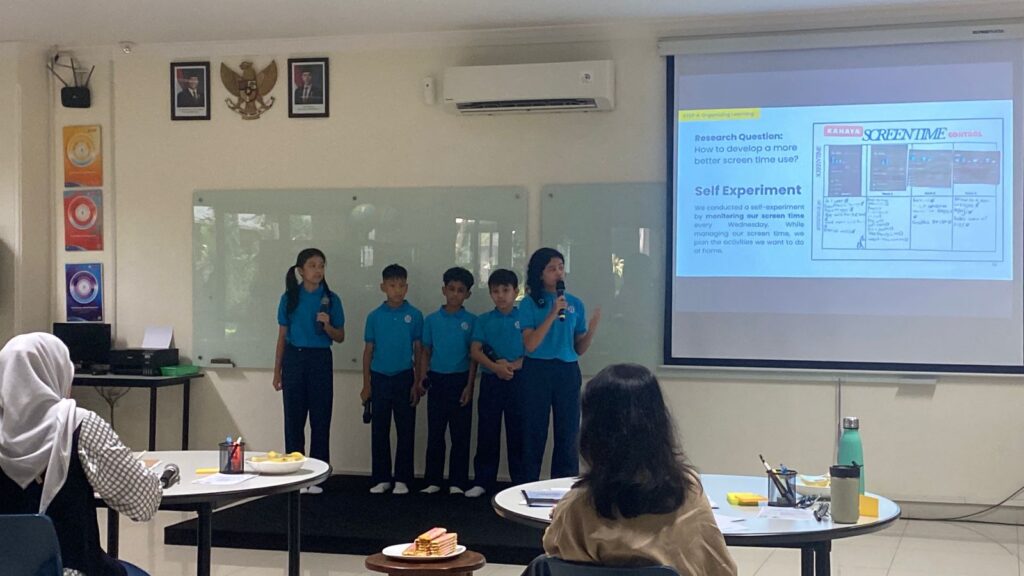
Self-Experiment
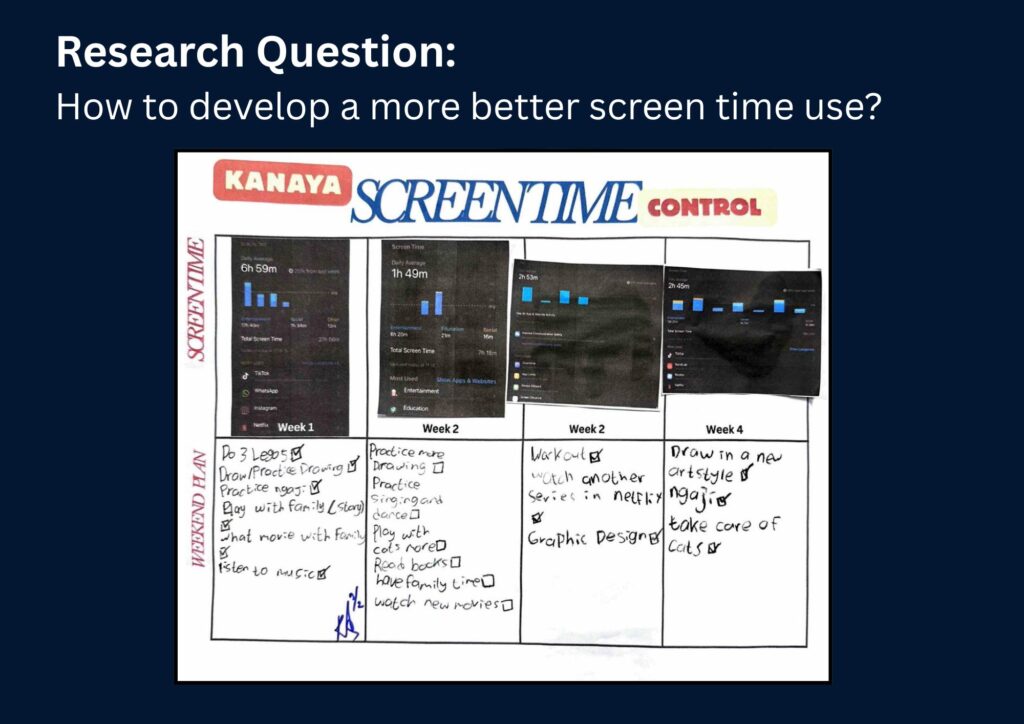
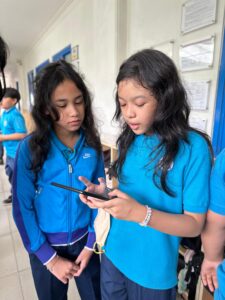
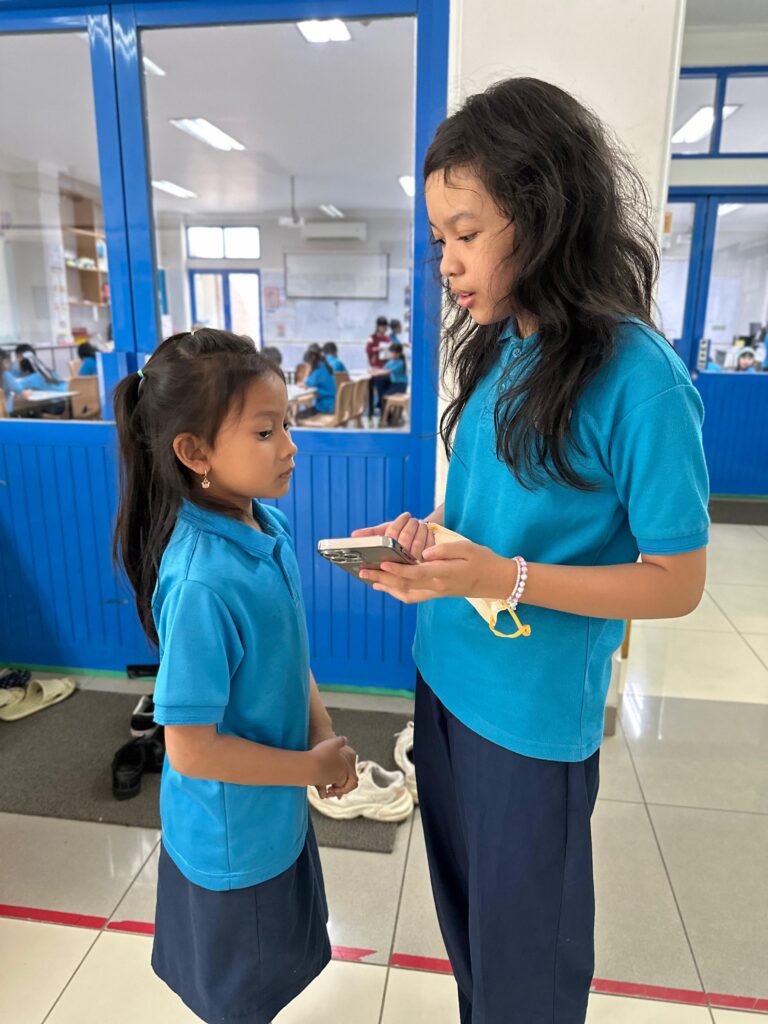
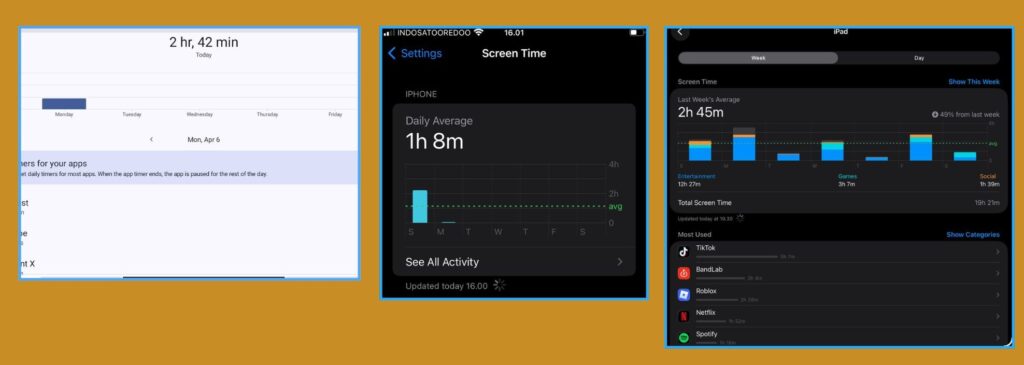
We conducted a self-experiment by monitoring our screen time every Wednesday. While managing our screen time, we plan the activities we want to do at home. The result of our social experiment in the first week showed that our total screen time was more than 6 hours.
Social Experiment
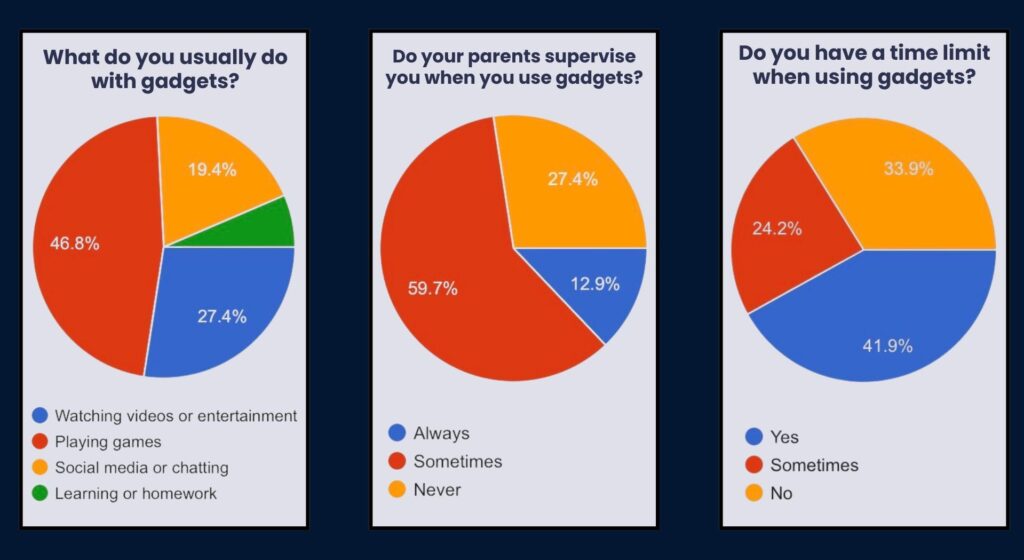
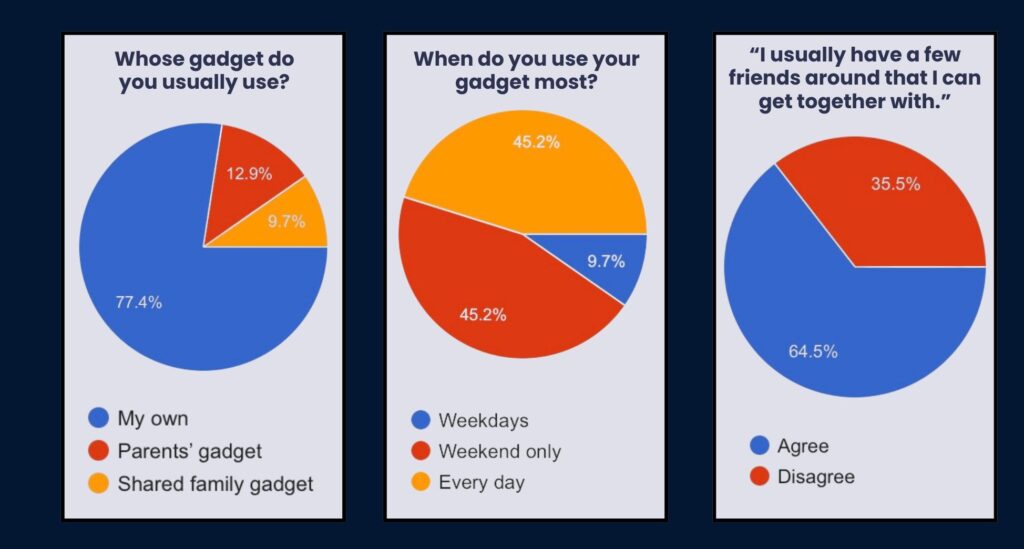
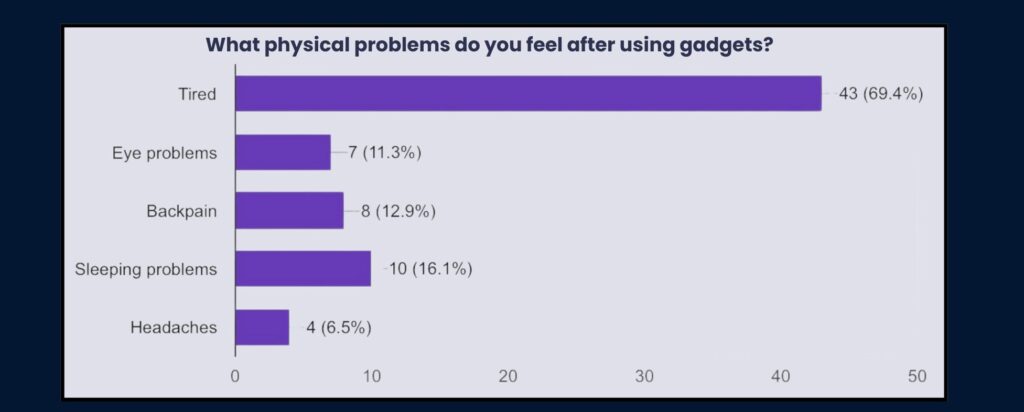
We conducted a social experiment by surveying Al Jabr students, Grade 1 until Grade 5 who responded from 62 participants.
Survey Result
Spending too much time on gadgets can harm children’s physical and mental health. Parents should watch and set limits on children’s screen time to two hours per day. Parents are encouraged to do play therapy with their children to help reduce screen time.
STEP 5: Sharing the Exhibition
Advocacy: Online Parents Webinar
Parents joined an online webinar to learn how to support children in using gadgets wisely. With guidance from a play therapist, this session helped families understand the impact of technology and how to keep children safe and healthy. Parents asked questions and shared their experiences at home. They learned simple tips to manage screen time every day. The speaker explained how gadgets can affect our body and mind. Parents also learned how to guide children to use technology for learning. This webinar helped build strong teamwork between school and families.
Social Entrepreneurship: Educational Flashcards
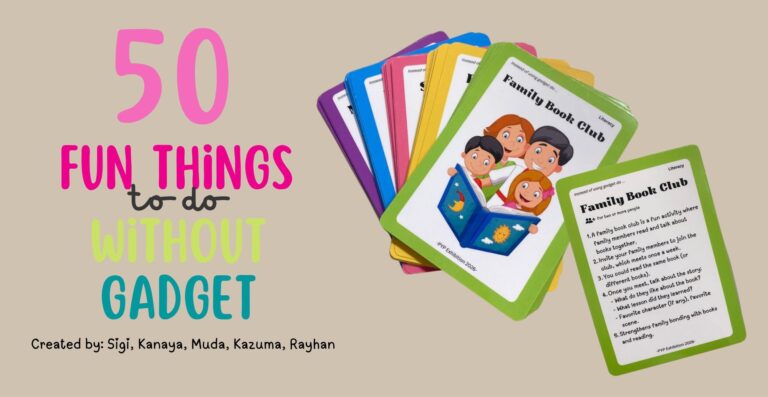
We created educational flashcards to share fun activities without using gadgets. These cards help children learn, play, and spend more time with family. This project teaches us to care about others and make something useful for the community. Through social entrepreneurship, we learn how to turn ideas into helpful tools. We hope these flashcards can inspire families to learn together every day.
Lifestyle Choice: Managing Screen Time
We learn to manage our screen time every day. Too much time on gadgets can make our body tired and our eyes hurt. By checking our screen time, we can make better choices for our health. We try to balance study, play, and rest. We can spend more time reading, playing outside, or talking with family.
Advocacy: Special Time
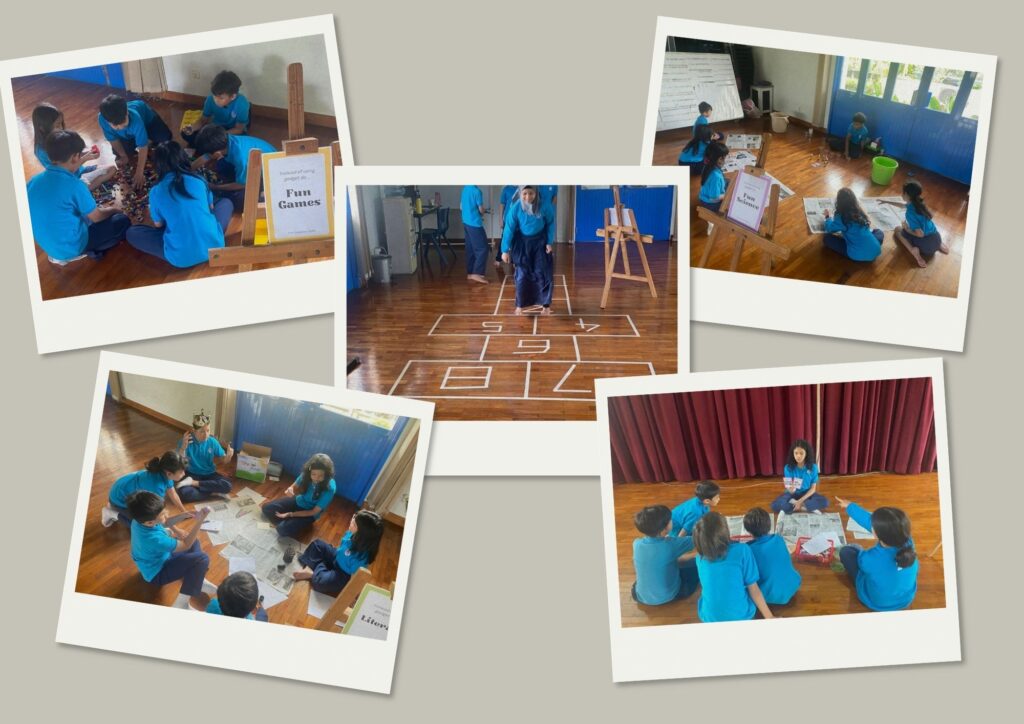
We spent special time together without using gadgets. We played games, learned new things, and had fun with our friends. This activity helps us feel happy, active, and connected with others. Special time is important because it helps us build strong friendships. We can talk, laugh, and learn together.
Further Action (Participation) Parents Workshop Proposal
We created a proposal for our school to plan a parents workshop. We want to invite a professional play therapist to share information and raise awareness about gadget use. Through this workshop, parents can learn how to guide and support their children in using gadgets wisely. We hope this program can help families build better habits and stay connected.
Panel Session
We confidently presented our exhibition to the Head of School and leaders, sharing our hard work and creativity. With confidence and clear communication, we explained our ideas and project, showing our understanding of the topic.
STEP 6: Reflection
We used to think:
Gadgets were a problem but didn’t know they could cause physical and mental problems.
Now we think:
Gadgets can help or harm us, and there are positive ways to manage gadget use.
Our Successes:
Understanding the impact of gadget use, reducing our screen time, and forming healthier habits.
Our Challenges:
Limiting screen time, using time well, and balancing gadgets with healthy habits.
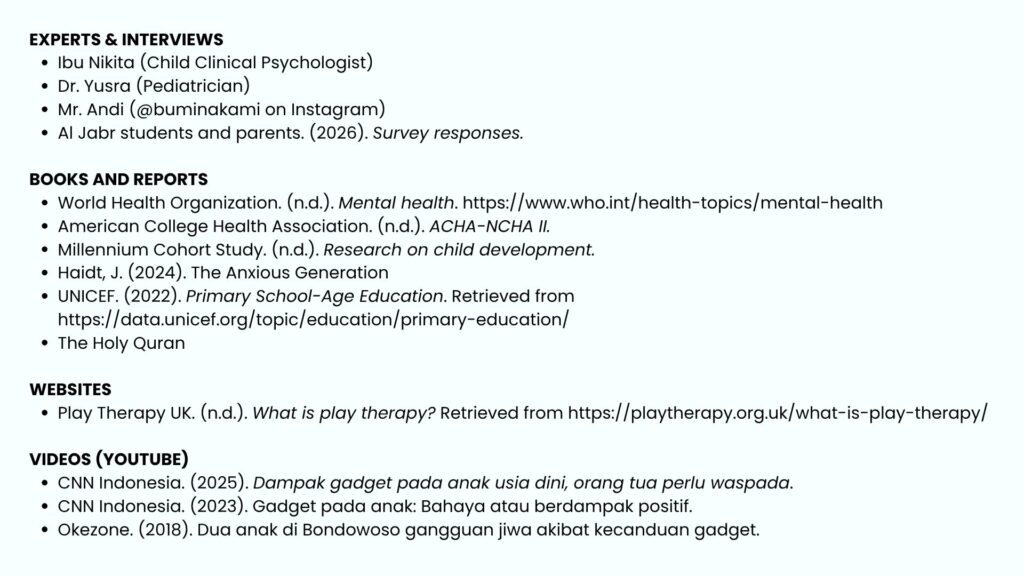
REFERENCES
Lorem ipsum dolor sit amet, consectetur adipiscing elit. Ut elit tellus, luctus nec ullamcorper mattis, pulvinar dapibus leo.