Micro plastics can pollute and endanger human health

Researchers

Shaquille

Mazaya

Radit

Myiesha

Mentors

Ms. Amel and Ms. Vivi

How the World Works

An inquiry into natural world and its law; the interaction between the natural world (physical and biological) and human societies; how humans use their understanding of scientific principles; and the impact of scientific and technological advances on society and on the environment

Central Idea

Microplastic can pollute and endanger human health

Learning Outcomes

Explain the effect of microplastic to human health

Compare and contrast different uses of materials that can replace plastic.

Evaluate the impact of microplastic to local environment

Key Concepts

Connection, Causation, Responsibility

Related Concepts

Human health, Pollution, Microplastic

Lines of Inquiry

Consequences of choices to human health

Behaviour and uses of materials

Action that benefits or harms the local environment

Sustainable Development Goals

Ensure healthy lives and promote well-being for all at all ages.

Ensure availability and sustainable management of water and sanitation for all.

Take urgent action to combat climate change and its impacts

Conserve and sustainably use the oceans, seas, and marine resources for sustainable development.

The golden circle

Why we need to choose this problem?

Because we expect more people to be aware that there are harmful microplastic that can pollute water and air.

How the problem affect our life and the world?
Microplastic has polluted our air, water and food. This condition really influence our life. We should find substitute of the plastics to have better health.

How can we solve the problem as fifth grader?
We can spread awareness of other people about how danger the plastic is

Al Qur'an Verses

  Al-Araf verse 5611

وَلَا تُفْسِدُوْا فِى الْاَرْضِ بَعْدَ اِصْلَاحِهَا وَادْعُوْهُ خَوْفًا وَّطَمَعًاۗ اِنَّ رَحْمَتَ اللّٰهِ قَرِيْبٌ مِّنَ الْمُحْسِنِيْنَ ۝٥

Janganlah kamu berbuat kerusakan di bumi setelah diatur dengan baik. Berdoalah kepada-Nya dengan rasa takut dan penuh harap. Sesungguhnya rahmat Allah sangat dekat dengan orang-orang yang berbuat baik.

Al-Isra  verse 27-28 65

اِنَّ الْمُبَذِّرِيْنَ كَانُوْٓا اِخْوَانَ الشَّيٰطِيْنِۗ وَكَانَ الشَّيْطٰنُ لِرَبِّهٖ كَفُوْرًا ۝٢

وَاِمَّا تُعْرِضَنَّ عَنْهُمُ ابْتِغَاۤءَ رَحْمَةٍ مِّنْ رَّبِّكَ تَرْجُوْهَا فَقُلْ لَّهُمْ قَوْلًا مَّيْسُوْرًا ۝٢

Sesungguhnya para pemboros itu adalah saudara-saudara setan dan setan itu sangat ingkar kepada Tuhannya.

Jika (tidak mampu membantu sehingga) engkau (terpaksa) berpaling dari mereka untuk memperoleh rahmat dari Tuhanmu yang engkau harapkan, ucapkanlah kepada mereka perkataan yang lemah lembut.

STEP 1: Identifying Globally Significant Issues

Exploring, Wondering and Musing

Microplastics are fragments of any type of plastic less than 5 mm. It was predicted that there are between 15 and 51 trillion pieces of microplastic in the world’s ocean. This condition really harm the local environment. Sources of microplastics include bigger plastic fragments that have broken apart, resin pellets used in the production of plastic, and microbeads, which are tiny, artificially made plastic beads used in cosmetic and health products.

Below are some facts about microplastics based on the students findings

Why do we want to investigate this topic?

Here are some videos that support our inquiry

STEP 2: Determining Timing And Time Frame

Making connection between previous learning and current learning 

G1: Health and well being; Sustainable and Earth Resources

G3: Human Body Systems

G4: Economic activity

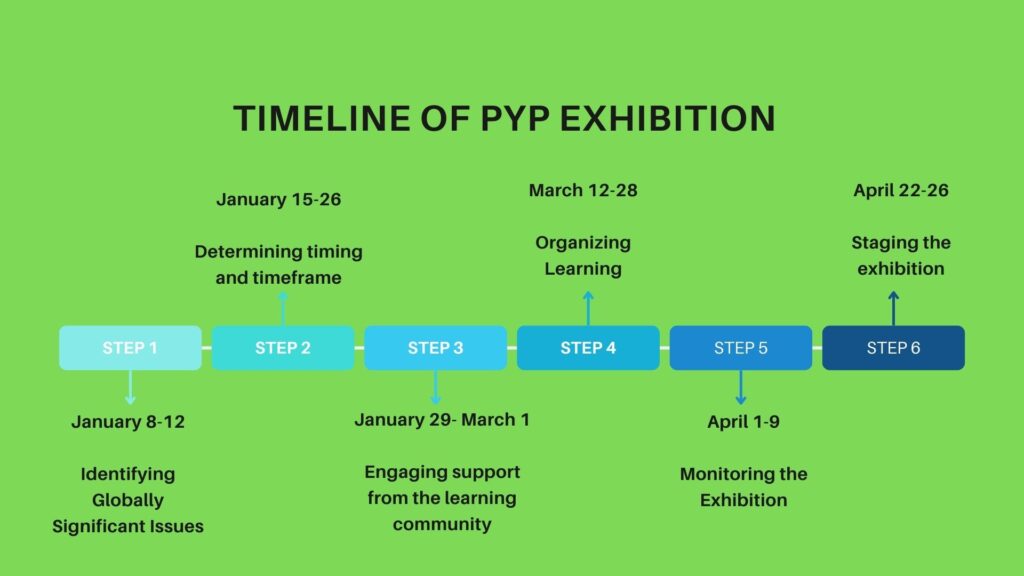
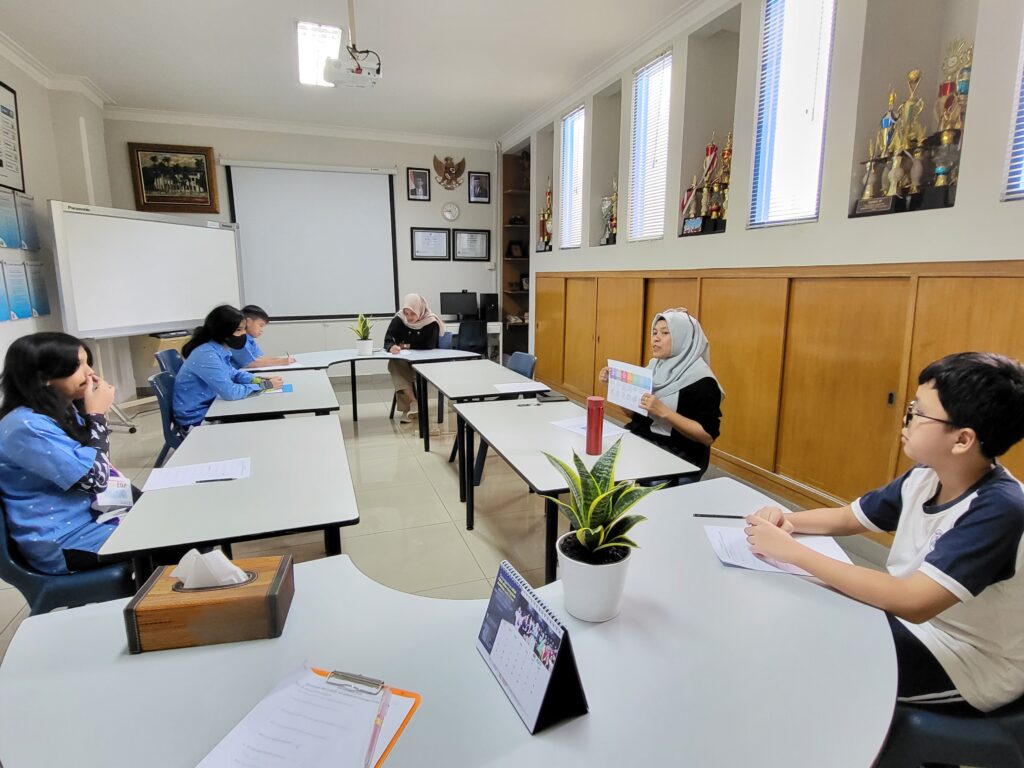
To achieve our goals in this PYP Exhibition, we collaborate and set the time lines. The students, teachers, mentors and parents collaborate effectively and give feedback throughout the process. To monitor the progress, we have mentor meeting three times a week and PYP Exhibition journal to be completed. 


STEP 3 Engaging Support From The Learning Community

Collecting Data and Reporting Findings or Researching and Seeking Information

Expert #1 Ms. Novia Rozet

As a start, we interviewed Ms. Novi to get information about how plastics are made. She shared her knowledge about how plastics are derived from organic materials such as crude oil, natural gas, salt, coal and in more recent years, from bio- matter. She also explained different types of plastics and how it differs from one to another. There are 7 types of plastics but only number 1 and 5 which are safe for consumption.

Expert #2
DR. Muhammad Reza Cordova from Badan Riset dan Inovasi (BRIN)

To gain information about climate and the extreme weather, we had an interview with Dr Muhammad Reza C from Researcher Center Oceanography, Badan Riset dan Inovasi Nasional. We conducted through zoom and visited the Laboratory in BRIN. Based on our meeting and visit, we can get lots of information. 

  • Humans today live in the plastic era however plastic dont break down but they break apart into smaller pieces.
  • Microplastics was formed because of sunlight, weather, climates, bacterias. 
  • Plastic trash mostly founded in the ocean and rivers in Indonesia.
  • Fish are opportunist which tend to eat objects that are similar to their regular food. Fish cannot differentiate between natural food and microplastics because they can be similar in size and shape. 
  • Planktons like to eat microplastics in the ocean while fish will the planktons. If human eat the fish then it will of course have impact to our health.
  • There are two types of microplastics. Primary microplastics and secondary microplastics. Primary microplastics come from cosmetics and medicines while secondary plastics come from bigger plastic sizes.
  • Mr. Reza conducted an experiment which prooved that microplastic could impact living organism. His experiment was about a fish which was fed with microplastic for  a specific period of time then he found that there was a behavior that changed. Then, it turned to a tumor after several time later. Knowing this result, it is clearly evidence that microplastics have impact to living organism. 

Expert #3
dr. Daulika Yusna

After knowing about microplastics in details, we continued to interview dr. Daulika Yusna as pediatric. She shared her experiences about how microplastics and BPA could affect the human health. We learned that we cannot live without plastics in our daily lives. Even plastics are used for medical tools and kits.

She informed that plastics or microplastics can enter our body through ingestions and inhalations. She mentioned that microplastics can affect human health and probably cause some diseases as below. 

1. Ashtma: The size of microplastics are too tiny and it can cause problems in the respiratory systems since our lungs get the pollutant which was carried by the microplastics.

2. Cancer: When microplastics with the pollutant enter our body, then it can disturb the hormonal systems. She mentioned that mostly cancers nowadays are influenced by hormonal like cervix cancer, breast cancer and prostat cancer.


STEP 4: Organizing Learning

Science Experiment

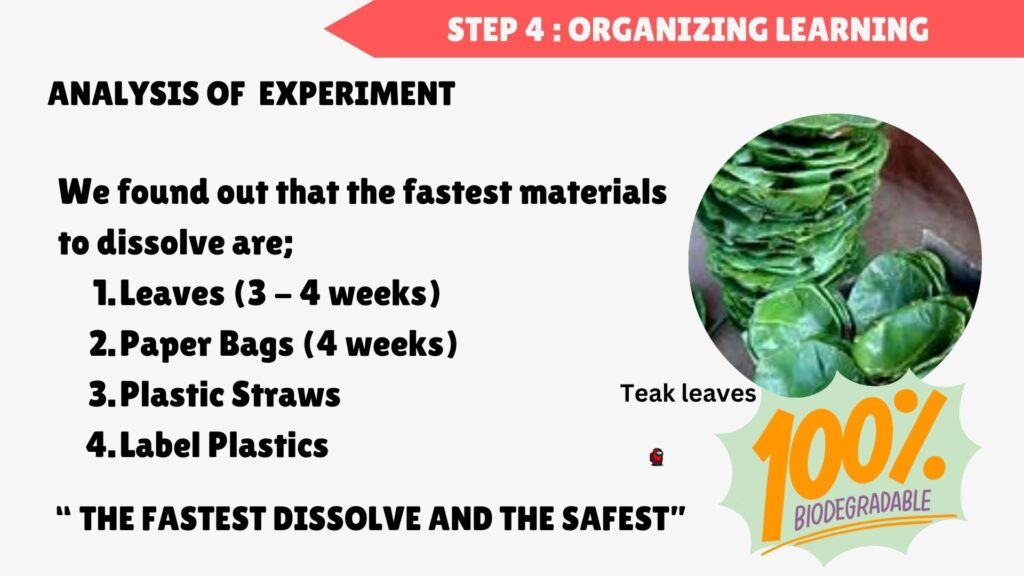
To have deeper research about the topic and follow up of the data collected from the experts, we did an experiment to find out which materiasl dissolves the fastest and the safest for the local environment abd human body.  

Materials

  1. Four plastics bottles, cut into half
  2. Soils
  3. Plastic labels (cutted in 5mm long)
  4. Plastic straw (cutted in 5mm long)
  5. Dry leaves (cutted in 5mm long)
  6. Paper food packaging (cutted in 5mm long)
  7. Scissor

Procedures

  1. Fill in four plastic bottles with soil.
  2. Bottle 1 is added with plastic straw. Bottle 2 is added with plastic label. Bottle 3 is added with dry leaves. Bottle 4 is added with paperbag. 
  3. Put all the bottles in outdoor area
  4. Record the changes daily within 5-6 weeks. 

STEP 5: Monitoring The Exhibition

STEP 6: Sharing the Exhibition

Actions: After completing our data through experiments and researchs, then we committed to do some actions.

Lifestyle Choice (Personal)

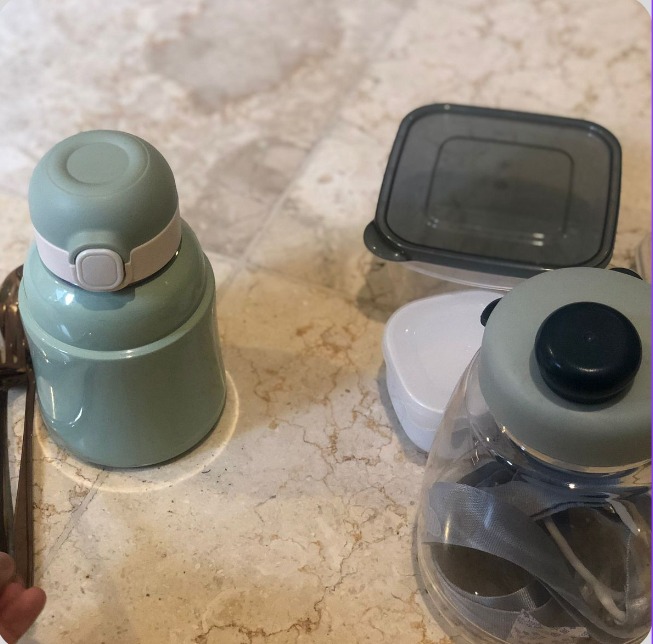
After knowing the danger or microplastics to our health, then we start from ourselves by sorting our food and drinks container at home. As dr. Daulika mentioned that we should start using other materials like glass, stainless and silicon to replace the plastics for food and drinks packaging. 


Advocacy (Share knowledge to SD Labschool Cibubur)

To share information about the microplastic to other communties, the students visit SD Labschool Cibubur as their action. They did presentation about microplastics, how it can enter our body, and the effect of microplastics to human health and environment. We encourage them to be more aware of their food and drink packaging and give them options of materials to substitute the plastics. 

It was a fun and meaningful session with the students, since they also learn how to make food container using banana leaves. We hope that they have learned about the danger of microplastics and support our action by not too much plastics on their routines. 


Advocacy (Share knowledge to Grade 4 students)

Based on our observation during our School Bazaar, we notice that the students often use plastics cups and plates for their packaging. This may cause too many plastic trash and of course it is not healthy for human health. 

Then, we want to make a little change by informing Grade 4 students who will have a Bazaar as their action after learning about economic activity. We taught the students of how to use banana leaves for their packaging. 


Social Entrepreneurship (In collaboration with Rumah Jambe)

Rumah Jambe is an UMKM located in Jambi that provides disposable plates from areca palm stem. These plates are friendly to environment and safe for us because it is from nature. We would like to sell these plates to school canteen as the replacement of plastics food packaging. 


Participation 

To make sure there will be plastics free packaging in the School canteen, so we composed a a recommendation letter to School Admin. We encouraged the School Admin to review about the policy of food and drink packaging in the canteen. We hope that our recommendation will be fulfilled and there will be an impactful change in the School canteen systems. By doing this, we can save the local environment and protect the school community from microplastics. 


Panel session with Head of School, Board of school, IB Principal, PYP Coordinator

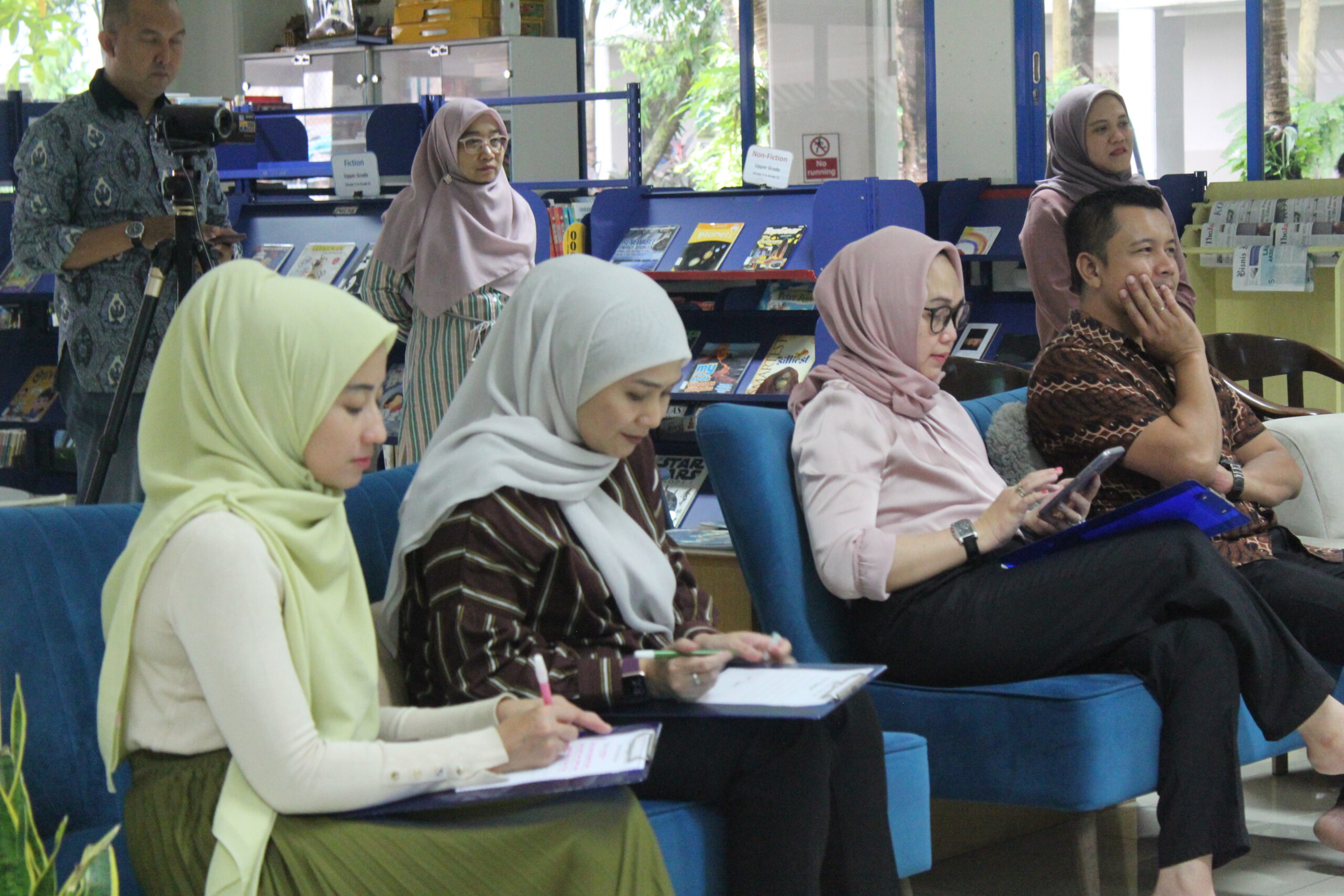
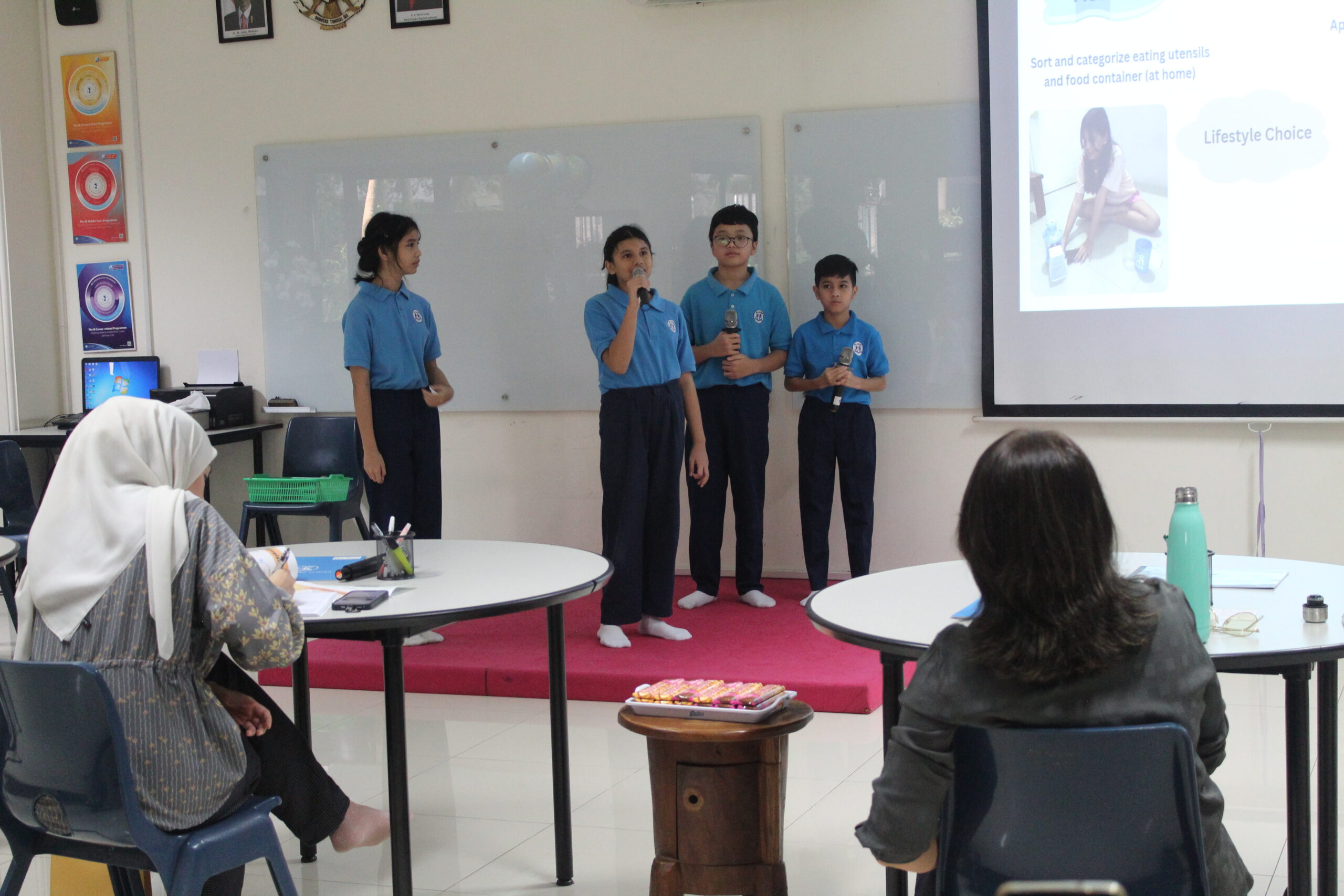
On April 23rd 2024, the students had opportunity to present about their project to Head of School, Board of School, IB principal and PYP Coordinator. Through this panel, the students demonstrate their ATL skills like communication and thinking skills. 

Staging with the School Communities

© 2022 All Rights Reserved.h3

Leave a Reply

Your email address will not be published. Required fields are marked *